Thursday, 21 July 2022

FreeUp! Emancipation Day Special to be Featured on CBC

 By Neil Armstrong


Photo contributed         Ngozi Paul, director of the FreeUp! Emancipation Day special on CBC on August 1, 2022


It wasn’t until 2017 that award-winning stage and screen actor, writer, producer, and director Ngozi Paul found out that August 1 was Emancipation Day and since then she has committed herself to engaging Canadians to know more and to tell the story. This was so even as her company, Emancipation Arts, existed well before she became aware of this important day in the history of Canada.


She spoke to Rosemary Sadlier, former president of the Ontario Black History Society, about its significance and her whole team vowed that they would celebrate Emancipation Day moving forward.


 “My company’s name is Emancipation Arts; I wrote a play called ‘The Emancipation of Ms. Lovely.’ To me, emancipation is, no pun intended, truly freeing up yourself, free up yourself or as Bob Marley says, ‘Emancipate yourselves from mental slavery. None but ourselves can free our minds.’”


Emancipation Arts is a multi-platform content creator committed to telling vital stories which showcase the diversity of human experience and expand social boundaries.


For Paul, the historic day represents “the opportunity to be a part of collective emancipation and liberation, and considering our history and also how we want to move forward collectively.”


She figured that if she did not know about it as someone who works in Afrocentric, Pan-African storytelling then there are many people who do not know about it as well.


“I think that’s very indicative of some of the gaping holes in not only our education but in our culture and wanting to recognize the whole picture of what Canada is and what the legacy of Canada is. So I think it’s a great opportunity for us to come together and decide what we want Canada to look like moving forward.”


The founder of FreeUp! — “a festival of arts and activism led by young people to celebrate Emancipation Day with our nation” — has a new artistic production that celebrates Black, Indigenous, and People of Colour (BIPOC) artists, virtuosos, entertainers and changemakers.


FreeUp! started as an open mic to celebrate Emancipation Day and to create a platform for artists, particularly young artists, to have a sense of agency, self-expression and civic engagement in relation to Emancipation Day.


They seek to answer the question — What does freedom mean? It gives them the opportunity to examine what it means and how to create space for artistic expressions around it.


Part of the philosophy of Emancipation Arts is the opportunity to take things from the grassroots to the world stage but also to maintain its authenticity, says Paul.


“FreeUp! grew quite organically, and from our first open mic at the Theatre Centre we were actually slated to be at Dundas Square in the summer of 2020. We all know that 2020 didn’t go how any of us were planning. And that’s when we pivoted to the Emancipation Day digital special on CBC for the first time in 2020.”


Paul says it was wonderful because they were able to create a platform for artists who would have been performing live at Dundas Square but they all had to shift to doing it on CBC and the show aired on CBC Gem.


“Every year, the program has grown and with the huge cultural shift that we are in the middle of it was like we are here as artists for times such as these. It presented an opportunity for them to not only celebrate Emancipation Day but also start to talk about what does freedom actually mean in present day. It allowed FreeUp! to create a platform to expand its reach and be a place where art and civic action can meet and express ideas of freedom. And I think that that’s just becoming so relevant in this time.”


In the first year, they honoured Sadlier and designed an award in her name. 


“That’s kind of something that I love to do. I love to grow, sort of like ‘da Kink.’ We started off at the Fringe Festival, and then we were at Theatre Passe Muraille, and then we were at Princess of Wales, and then we were a TV show. That’s kind of what I do; that’s what I love to do. That’s what Emancipation Arts is.”


Following the groundbreaking and successful run of the theatre production 'da Kink in my Hair, Paul co-created, executive produced, and was a lead cast member in the television series by the same name. 


Freedom Talk, a part of the August 1 showcase, allows artists to be vulnerable, conversations to happen, and there appears to be a catharsis experienced in their storytelling.


Paul says the artists were expressing the same experiences she had and questioned, and she was able to create space for things to happen.


On March 24, 2021, the House of Commons voted unanimously to designate Aug. 1 as Emancipation Day across Canada — a day to celebrate, educate, and reflect on what freedom means. The date commemorates the Abolition of Slavery Act, signed into law on August 1, 1834, which freed over 800,000 people of African descent in Canada and throughout the British Empire. 


This recognition of Emancipation Day by the federal government came after decades of activism from people such as Sadlier, a recipient of the Order of Ontario; historians Afua Cooper, Adrienne Shadd, Karoyln Smardz Frost and Natasha Henry-Dixon; Senator Wanda Thomas Bernard of Nova Scotia, and the Ontario Black History Society. Liberal MP Majid Jowhari sponsored the bill in Parliament. Henry-Dixon, president of the Ontario History Society and assistant professor of African Canadian History at York University, has written two books about Emancipation Day — Emancipation Day: Celebrating Freedom in Canada and Talking About Freedom: Celebrating Emancipation Day in Canada. Cooper, Shadd and Smardz Frost are the authors of The Underground Railroad: Next Stop, Toronto! which has been longlisted for the 2022 Toronto Book Awards.


To mark the historic occasion, Freeup! in partnership with the CBC will present a two-hour special featuring moving insights and roundtables with artists from across Canada punctuated by a film produced by Paul. 


The film features four original songs from some of Canada's premier Black vocalists, including ‘Canada’s Queen of R&B Soul’ singer-songwriter Jully Black, award-winning soprano Measha Brueggergosman-Lee and performing artist Ahmed Moneka.


It was shot at St. Lawrence Hall, site of the 1851 North American Convention of Colored Freemen and the Buxton National Historic Site. It is also a former endpoint on the Underground Railroad. 


The FreeUp! Emancipation Day special will be on before Freedom Talk and will feature existing Emancipation Day celebrations such as the 160-year-old one in Owen Sound. “Older than Canada,” says Paul, noting she had no idea that they used to celebrate Emancipation Day in Windsor with tens of thousands of people.


“Our show that’s right before Freedom Talk is this opportunity for us to put the spotlight on these great organizations that have been doing things for years.”


“We are standing on the shoulders of our ancestors and we don’t have to start again always,” says Paul citing Sadlier’s work and acknowledging that, “it’s time for people to get their flowers now.”


Photo contributed      Legendary jazz musician Joe Sealy


The first hour features different parts of the country and presents the historical context of Emancipation Day. It is performance-driven and legendary jazz musician Joe Sealy will be presented with the Rosemary Sadlier Award. Past recipients include artists Jully Black, Motion, and d’bi.young anitafrika.


The second part is the Freedom Talk — this is the first time — where they have the opportunity to go a little bit deeper and they facilitated those conversations with artists from around Canada, says Paul.


“That’s the great thing about building and it’s definitely hard. There’s a lot of work to do and it has its moving parts and the necessity to grow but I really consider it such an absolute privilege to be able to. Really, it’s continuing the legacy of many generations before us.


The two-hour special will air at 8 p.m. ET on CBC and CBC GEM as part of a two-hour special on Aug. 1. 


Some Emancipation Day Events in Ontario


The 2022 Amhertsburg Freedom Museum Emancipation Celebration will take place on July 29 at 6:00 p.m. at the Fogolar Furlan, 1800 North Service Rd. E., Windsor, Ontario. This event recognizes the 188th anniversary of the Abolition of Slavery in Canada in 1834 and the federal recognition of Emancipation Day in Canada. Emancipation22.givesmart.com


The 160th Owen Sound Emancipation Day Festival will take place from July 29-31 at Harrison Park in Grey, Bruce and Simcoe Counties. 


The Black Council of Windsor-Essex invites you to this year’s Emancipation Jubilee events from July 30 – August 1, 2022.


Honouring 90 years since the first Emancipation Day celebration, The Emancipation Jubilee commemorates the Emancipation Proclamation of August 1, 1834, that ended slavery throughout the British Colonies, including Canada and parts of the Caribbean. 


Emancipation Day at Uncle Tom’s Cabin Historic Site – an annual celebration of hope and freedom commemorating the end of slavery in the British Empire. July 30, 10:30 a.m.-2:30 p.m. “This year is extra special as we unveil a new name that better reflects the true history of the site – don’t miss out!”  Heritage Singers Canada is among the performers.   


In St. Catharines, Matter of Black (M.O.B) and BlackOwned905 present #EmancipationDaySTC, a celebration to reawaken old traditions and foster greater solidarity and pride among members of the Black Canadian community in memory of its remarkable achievements and in face of persistent racism. The free events will feature speakers, film screenings, conversations, streamed performances, and a virtual market featuring black owned businesses from July 30 – August 2.


Photo credit: Neil Armstrong   Jean Augustine, seen here being interviewed on the Emancipation Day Underground Freedom Train Ride, will be the conductor on July 31 from Union station to Sheppard West Station


The Emancipation Day Underground Freedom Train Ride, a night of music and storytelling, will take place on July 31, starting at 11:00 p.m. at Union Station (near the ticket booth) and arriving at Sheppard West Station at 1:00 a.m. This year’s conductor will be Dr. Jean Augustine. “Join us too on August 1st, 12PM-2PM, as we emancipate and animate Bloor Street from Bathurst to Christie Pitts,” say the organizers that include Blackhurst Cultural Centre, Toronto Transit Commission (TTC), Coalition of Black Trade Unionists (CBTU), African Canadian Heritage Association, Zero Gun Violence Movement and others. It is a community initiative to recognize the historical significance of the Underground Railroad and Emancipation Day in Canada.


The train ride will feature Calypso Monarch, Macomere Fifi, award-winning actor Conrad Coates, the Freedom Train Ride Choir, producer and actor Arnold Pinnock – The Porter series CBC.


Photo contributed    Rosemary Sadlier, a former president of the Ontario Black History Society, will be the guest speaker at The Cathedral Church of St. James on July 31


On July 31 at 11:00 a.m., The Cathedral Church of St. James will celebrate Emancipation Day with guest speaker, Rosemary Sadlier. 


The Ontario Black History Society (OBHS) in partnership with Fort York National Historic Site presents Emancipation Day 2022 Celebration on August 1, 12:30 p.m.-2:30 p.m. at Fort York National Historic Site, 250 Fort York Blvd.


Photo contributed       Nikki Clarke, a former president of the Ontario Black History Society, will be the emcee of the Emancipation Day Celebration at Fort York National Historic Site


The keynote speaker will be Dr. Kristin Moriah and there will be performances by poet Hannah Flores, dance by The Coco Collective and spoken word by Dionne Samuels. The emcee will be Nikki Clarke, a former president of the OBHS.


“The OBHS is excited to welcome our members, supporters, and the general public to participate in our annual Emancipation Day event. We are so glad to be able to return in-person with an outdoor event that people will feel comfortable to attend. As with the long history of Emancipation Day commemorations, it is an opportunity to learn about Black Canadian history, fellowship and celebrate in community, honour our ancestors, and be re-energized to agitate for justice to improve the conditions and outcomes for Black people today and in the future. We are carrying on a rich tradition that is part of the long struggle for freedom for Black people, a goal that remains relevant today,” says Henry-Dixon who will be signing copies of her books at the event. 


Photo contributed     Natasha Henry-Dixon, president of the Ontario Black History Society


The City of Brampton will celebrate Emancipation Day on August 1, 12:00-8:00 p.m. at Emancipation Park, 7599 Dixie Road in Brampton with food vendors, a Caribbean Craft Market and live entertainment. 


The House of Culture presents Carnival City, a 12-day showcase of Caribbean culture. On August 1, there will be an Emancipation Day Special Presentation featuring Eddie and Quincy Bullen and others at Ajax Downs in Ajax, Ontario.


Wednesday, 13 July 2022

Luminaries in Toronto’s Caribbean Community Receive Honorary Degrees

By Neil Armstrong


Photo credit: York University      Gregory Sorbara, Chancellor of York University; Olive Senior, writer and public intellectual; and Lisa Philipps, Provost and Vice President Academic


Three of Canada’s leading universities have conferred honorary degrees on six well-known Caribbean Canadians — Jamaica’s poet laureate Olive Senior by York University, entrepreneur and philanthropist B. Denham Jolly; health-care leader Camille Orridge, and community advocate Winston LaRose by the University of Toronto; and entrepreneur and business leader Wayne Purboo and former Canadian citizenship court judge Pamela Appelt by McMaster University.


Senior was among 12 individuals recognized for their outstanding contributions to community building, social justice, mental health advocacy and Indigenous rights at today’s spring convocation.

“The individuals we are celebrating with honorary degrees represent the best of what York University stands for – our commitment to enhancing the well-being of the communities we serve – toward reconciliation, human rights, social justice, and more,” said Rhonda Lenton, president and vice-chancellor of York University.


 Lenton. “Their remarkable accomplishments serve as inspiration for York’s newest graduates and for all of us.”

“Senior is an award-winning Canadian writer and public intellectual of Jamaican heritage. Her work has been translated into multiple languages, and her Encyclopedia of Jamaican Heritage is a widely read and cited reference text,” notes the university.


In her commencement address, Senior told the graduates that she grew up in a mountain village in Jamaica. “I didn’t get many presents. But I had one gift — the gift that all children are born with  — but which many unfortunately, lose along the way. That is, the gift of curiosity.”


She said curiosity sometimes has a negative connotation but she was talking about curiosity of the positive and constructive kind — an attribute that is innate. 


“I feel fortunate now to have retained that sense of wonder that has kept me continuously asking questions and seeking answers. I can say, unequivocally, that curiosity is the engine that has driven my life and the work for which I am being honoured today.”


Senior’s many awards include Canada’s Writers Trust Matt Cohen Award for Lifetime Achievement, the OCM Bocas Prize for Caribbean Literature, the Commonwealth Writers Prize, an honorary doctorate from the University of the West Indies and the Gold Medal of the Institute of Jamaica. 

Jolly, a radio pioneer and champion of social justice, was awarded a Doctor of Laws, honoris causa, from the University of Toronto for his leadership in promoting equity, social justice and opportunity in Toronto. 


Photo credit: Lisa Sakulensky    Denham Jolly, an entrepreneur and philanthropist, addressing the graduands at the University of Toronto's spring convocation    


In his address, Jolly, who moved to Canada in 1955 to pursue a science degree at McGill University in Montreal, Quebec, said he left Jamaica at the age of 20 for study at the university and graduated in 1960.


“As an entrepreneur, I have done well financially starting from humble beginnings. When I look back, it seems that I did well by trying to do good,” said the co-founder of Flow 93.5FM, Canada’s first Black owned and operated radio station, and a former owner and publisher of Contrast, the groundbreaking Black community newspaper in Toronto which was founded in the late 1960s. 


Charting his history in Canada, Jolly said his first job was as a teacher in Sault Ste. Marie and later in Toronto. He bought a rooming house near the University of Toronto and subsequently left teaching to go into the nursing home and small hotel business. These were all acquired while following his father’s advice: “Don’t work for anyone but yourself and always work to own property.”


In 2021, he was appointed a member of the Order of Canada.


Photo credit: Lisa Sakulensky      Camille Orridge, a pioneering health-care leader and an alumna of the University of Toronto


A University of Toronto alumna, Orridge was recognized for being a pioneering health-care leader and for her promotion of a more equitable and just health system, especially for marginalized, racialized and Indigenous communities. 


In a call to action, she urged the graduates to make a personal commitment to inclusive spaces by keeping the air around them free of discrimination.


“On a personal level, this means you will not accept things such as homophobia, sexism, ageism, ableism, and all the other –isms in your presence or your earshot. This may sound easy. However, these types of personal commitments are often more challenging to uphold. A personal commitment means you will not let things fly under the radar, but will be open to having difficult conversations with family, friends, colleagues to uphold inclusion for all.” 


She served as CEO of several prominent local health organizations and co-founded the Canadian Home Care Association and Pathways to Education, a nationwide stay-in-school program for disadvantaged high school students. Orridge is also one of the founders of the Black Coalition for AIDS Prevention (Black CAP), Canada's largest Black-specific AIDS service organization. She is a Senior Fellow at the Wellesley Institute.


Photo credit: Lisa Sakulensky   Left to right: Dr. Kofi Hope, Chancellor Rose Patten and President Meric Gertler


LaRose was recognized for being a leader, advocate and dedicated supporter of the Black community in the GTA and beyond. He is the executive director of the Jane-Finch Concerned Citizens Organization, earning the title "Mr. Jane and Finch" after dedicating most of his life to the neighbourhood and its residents. He has also been an avid recorder of lived Black experience around the world.


“The people of Jane-Finch to whom I am dedicating the receipt of this magnificent honour; the people of Jane-Finch are my family. And it is only because of them that I have been able to get to this particular podium and so when I get my post-secondary students who come over to the Yorkgate Mall to do their placements with me, and if they’re not from that community and particularly if they’re white, they’d say is it safe to come here. I’d say, well I’m here and I’m still alive. Why should you have fear? And I’ve been able to travel around that community for the almost 30 years that I spent there giving my service for free. And I’ve not been paid a nickel in all the years and I have not missed a day except when I am out of the country.”


He advised the graduates that no matter how difficult their journey there is some kind of success awaiting them once they are able to recognize it once it appears. 


“Never be deterred by the fact of the adversities that might seem very daunting. They are meant to lift the level of your performance and to give value to the achievement the more difficult those challenges are,” said LaRose.


Photo credit: McMaster University    Entrepreneur and business leader Wayne Purboo


Purboo, a McMaster graduate, has over 25 years of experience in the media and telecommunications industries. He was the co-founder and CEO of QuickPlay Media – a company providing mobile media services to premium video service providers – is now vice-president of Amazon Advertising. 


He has volunteered with many organizations including Virgin Unite, Toronto International Film Festival (TIFF), and SickKids. Purboo has also shared his entrepreneurial skills and experience with McMaster students at The Forge, McMaster’s start-up accelerator. In 2006, he was named one of “Canada’s Top 40 Under 40” by the Caldwell Partners and is a recipient of the University of the West Indies Vice Chancellor’s Award.


Photo credit: McMaster University Retired Canadian Citizenship Court judge Pamela Appelt and Chancellor Santee Smith


Appelt is a retired Canadian Citizenship Court judge — the first female Afro-Canadian to serve in that position — and community volunteer who has spent her life working to improve the lives of children and families. She immigrated to Canada in 1966 and worked as a researcher in medical biochemistry at McGill University for several years. 


Appelt holds a Master’s degree in Public Policy and has spent her life working with numerous community and national organizations, including helping found the Black-Jewish dialogue of B’Nai Brith Canada. She played an instrumental role in bringing the archives of iconic Jamaican-Canadian poet Louise Bennett-Coverley to the McMaster University Library.


Wednesday, 6 July 2022

New Documentary Explores the Experiences of Black Canadian Filmmakers

By Neil Armstrong


Photo credit: OYA Media Group           Legendary filmmaker Claire Prieto-Fuller in Reel Black: Our Film Stories, a new documentary premiering on CBC Gem and CBC Television's Absolutely Canadian 

When intergenerational conversations happen between Black Canadian established and emerging filmmakers what results are pearls of wisdom about the film industry, the gatekeepers, challenges, strategies and victories.

These moments are captured in “Reel Black: Our Film Stories,” produced by OYA Media Group’s award-winning creative team, in which emerging Black filmmakers Christian Anderson and Ajahnis Charley learn what it takes to fulfill their filmmaking dreams through the insight of legendary filmmaker Claire Prieto-Fuller and seasoned filmmakers Karen King, Christene Browne, Karen Chapman, and Kelly Fyffe-Marshall.

The new documentary premieres on CBC Gem on July 8, followed by a debut on CBC Television’s Absolutely Canadian, province-wide in Ontario on July 9 at 8pm EST. 

Reel Black: Our Film Stories highlights the urgent need and demand for Black Canadian stories, and critically examines the barriers unique to Black filmmakers in Canada’s film and entertainment industry, while exploring the power of Black narratives. 

It also addresses the common and prohibitive challenges that Black Canadian filmmakers contend with in Canada’s film scene. Due to systemic barriers and inequities surrounding what stories get disseminated in mainstream media, Black narratives have been marginalized, deemed less appealing for Canadian audiences, or are under-marketed once produced.

“I have a passion for filmmaking. This is what I want to do, however there are barriers in the film industry that are unique to Black filmmakers that we can't ignore. I can't help but wonder, do things get easier with time,” asks Anderson.


Prieto-Fuller advises the emerging filmmakers to start with their own story because they will be more passionate about it and it will show.  She told them that when they are on the other side of the camera as producer and director they have more power than the person — like her in this documentary — being interviewed on camera.

Karen Chapman recounts pitching her film to gatekeepers in the film industry and being asked if it would relate to someone in the prairies — which smacked of racism because Black people live in the prairies too. Karen King remembered approaching the National Film Board with a film idea and being told that they made a black film the previous year. 


Photo credit: OYA Media Group      Karen King, veteran producer and production manager


“It’s been like there is some kind of entitlement that nobody else is allowed to work in the industry,” notes King, citing examples of driving by film shoots in Toronto and seeing only white people.

Browne highlights that those in power put rules in place that help them to maintain their power. 

Prieto-Fuller shared the history and mission of the Black Film and Video Network, founded in 1988, to encourage and promote the development, production and distribution of the work of Black film and video-makers in Canada. Browne recounts that her first job in film was provided by Prieto-Fuller.


“Once power structure changes then we will have more opportunities for more diverse stories that are representative of the reality of Canadian society,” says Browne. Charley wants to see that change soon — “The representation on screen is nice, but I also want to see more Black crew, I want to see Black writers, Black producers, and Black managers.” 


The documentary follows two burgeoning, contemporary Black Canadian filmmakers, Ahjanis Charley and Christian Anderson who are mentees in OYA’s Emerging Filmmaker Program. Their journeys are juxtaposed alongside key Black forerunners in Black Canadian film, including Claire Prieto-Fuller, producer of Some Black Women (1977), one of the first Canadian films to be produced by a Black filmmaker, Clement Virgo and Karen King (producers of Rude, 1995 featured in Cannes film festival), Christene Browne, director of Another Planet (1999) the first feature film created by a Black woman, Karen Chapman, director of Measure (2019) and Kelly Fyffe-Marshall, director, Black Bodies (2020).


Photo credit: OYA Media Group      Christene Browne, director and writer


“As Black filmmakers in Canada, we are met with many obstacles in telling our own stories. We want to demystify the notion that Black stories are separate from Canadian stories, and authentically share our lived experiences through our lens. Our stories shape the history and reality of Canadian society, they are meaningful and nuanced, deserving of the same platform to have our voices heard,” says Alison Duke, co-founder of OYA Media Group.

OYA aims to create space through their non-profit organization, OYA Black Arts Coalition (OBAC), which promotes more diverse stories and uplifts emerging Black Canadian creators through mentorship, training programs, and other key resources to empower and equip the next generation of filmmakers and increase visibility on screen and behind the scenes. This film project was created by participants from OYA’s Emerging Filmmaker Program, they are: Tristen Sutherland, Alexx Bryant, Ayan Tani, Émeraude Domingos Mbuku, Leilah Dhoré, and Enni Balo. 


Photo credit: OYA Media Group     Emerging filmmakers Christian Anderson, left, and Ajahnis Charley


“Reel Black: Our Film Stories acknowledges some legendary Black Canadian filmmakers who have contributed seminal Black stories to the Canadian film landscape. Kudos to their work while navigating systemic and other barriers.  As OYA alumni, we recognize the importance of Black filmmakers having capacity to share Black stories, and are grateful to Alison, Ngardy and team for the opportunity to learn inside this very special industry ecosystem,” says Tristen Sutherland, director/producer of Reel Black.


Saturday, 18 June 2022

Celebrating Pride In Person Means a Lot to These Torontonians

By Neil Armstrong


Photo contributed      Keysha Miller, Coordinator of the Trans and Non-Binary Youth Service Plan, Black Coalition for AIDS Prevention (Black CAP)


The city is abuzz with excitement for Pride Toronto 2022 and some of its residents who will be attending the three-day Pride Festival Weekend, June 24-26, for the first time say they are expecting something big and hopefully will not be overwhelmed.


The 41st celebration of the Pride Parade on the last Sunday of June will include over 200 contingents and more than 200,000 marchers. Organizers say the parade is about celebrating diversity and creating an inclusive experience for all. They are taking a more sustainable approach to it with the goal of eventually hosting a zero-waste festival in the future.


The Black Coalition for AIDS Prevention (Black CAP), Canada’s largest Black specific AIDS service organization, is the Pride 2022 Charity of Choice and its volunteers and staff are ready for the busy weekend.


“I really am just open to the experience, like everything — the people, the music, the culture — gay culture, it’s not something that you are exposed to in Jamaica and so it’s something new and exciting,” says Nicholas who is a newcomer to Toronto and volunteers at the non-profit, community-based organization. He is looking forward to the total experience.


He says Pride is significant because as a gay man he gets to see his community, firsthand, celebrates what it means to be proud of who you are. “To be a part of that, I think, is something tremendous. I can’t wait to bask in what Pride is, bask in the whole significance of what Pride means and to celebrate who you are.”


Nicholas says Black CAP is unique to individuals who are racialized, specifically Black, Caribbean, and African members of the LGBTQ+ community. “As a gay Black man, I think it was important for me to give my time, effort and energy into building a community that I personally identify with.”


He says when he thinks about the origin and history of Pride, the festival today is honouring those who were oppressed and continue to be oppressed, chased, and killed just for being who they are — gay. 


“I think it is tremendously important for us to be able to walk freely and proudly and say this is who I am, this is who we are, and we’re here to stay and we’re going to be who we want to be.”

Having spent the last two years under lockdown because of the pandemic, Charlton Jones is looking forward to socialize at Pride.


As someone from the Caribbean, Jones says he has listened to a lot of dancehall music and is therefore anticipating the performance of the ‘Queen of Dancehall’ Grace Hamilton, aka Spice, who has been in the music business for 20 years and will be the headliner at the opening ceremony for the Pride Festival Weekend on June 24 at Yonge-Dundas Square.


Photo courtesy of Pride Toronto    Spice, Queen of Dancehall


As the Charity of Choice, Black CAP will be at the forefront of the Pride Parade and Jones is happy that this creates an opportunity for the agency to raise funds and for him to help in any way possible.


He wants to connect with fellow LGBTQ people at Pride and says the event is symbolic of sending a message to those who are outside of the community to end the discrimination many queer people experience.


“We are persons too, just like anybody else who are outside of the community. We have feelings, we have a voice, we have a say; we have a place, so this event is symbolic of all of that. A great platform, a powerful tool to echo to the rest of the world our place, our continued emerging space.”


Keysha Miller, coordinator of the trans and non-binary youth service plan — a peer-led initiative engaging trans and non-binary youth around service and employment — says she is looking for a sense of community and place where she can be herself and let her hair down at Pride.


“I’ve never actually been to a Pride event before so, for me, I guess it’s a liberating experience,” she says, noting that she can live comfortably and “be happy in the skin I was given.”


Miller says she is living in her truth and therefore anything she does, such as working at Black CAP, walking a ball [Ballroom culture], or attending Pride is in celebration of herself and her courage.


“It gives you a sense of belonging, it also gives you a sense of you know what, I can be confident. There are people like me; I can turn to them for support. It’s also necessary because there are resources at events like Pride.


Black CAP will have a booth where people can get information on harm reduction, HIV, and employment. “It’s almost like a celebration of being you, a social event,” says Miller.


She says Pride is necessary because in society people who are deemed different — being trans, gay, lesbian, bisexual, and are Black or Latinx — their intersectionality separates them from the rest of the world that is predominantly white, cisgender, heterosexual, and corporate.


Photo contributed      Garfield Durrant, Men's Prevention Specialist at the Black Coalition for AIDS Prevention (Black CAP)


For Garfield Durrant, men’s prevention specialist at Black CAP, this is not his first Pride but he has not attended the annual event in a while. Although he is looking forward to the festivities, he prefers being centred on the conversations that will discuss the impact of COVID-19 on the lives of people and the support they need.


“It’s an opportunity for us, really, to be more focused to get a deeper understanding in the community of what we need to do, especially from a service provider lens,” says Durrant, who will be attending as a patron but also as a service provider.


He intends to look at behaviours and have conversations with people to assess how they are doing, what kind of supports they need, and how their lives have been affected by the pandemic.


He says the issues that Black Lives Matter brought to the fore are still a concern, and there are matters related to racialized, Black trans people who engage in sex work and their housing, employment, food security, mental health and substance use challenges.


“Sexual health is really our primary goal but we find that since the two years of the pandemic and going forward, mental health is something that we have been dealing with at the forefront. 


Durrant is thankful for the funds that will come from Pride 2022 for Black CAP to use for its programming for the trans community and settlement for newcomers. The agency hopes to increase awareness of its work in the wider society too.


Black CAP will also be present at the annual Blockorama — Pride Toronto’s largest and longest-running stage — that has been a space celebrating Black love, joy, music, and community for over 20 years.  It spotlights Toronto’s local Black performers, artists, DJs, drag artists and ballroom at the Wellesley Stage, across from Wellesley subway, on June 26. 


The headliner will be soca star Patrice Roberts and for the first time, this year there is an additional event — four hours of “Blocko After Dark” on Saturday night, June 25.


Photo courtesy of Pride Toronto              Soca star Patrice Roberts


The Black Coalition for AIDS Prevention is seeking volunteers to march with it at the upcoming Pride Parade on June 26. Visit blackcap.ca for more information. 

 New 

Friday, 10 June 2022

Some Scenic Places to Visit While in Jamaica to Celebrate Independence

By Neil Armstrong


Photo credit: Neil Armstrong     The view from an elevated gazebo at UCC Blue Mountain Coffee Craighton Estate in Irish Town, St. Andrew


Imagine being in Jamaica and visiting a verdant plantation and garden where the hummingbirds are called by their names and swoop in once summoned, or being within the reach of fruits such as coconut, tamarind, guava, jackfruit, breadfruit, bananas, mammee, pineapple, and more.


What if you could go clubbing at a nightclub on a Sunday where the dub vibes are so pulsating that you and others are moving in sync to the drum beat of the reggae music and viewing the glorious skyline of Kingston.


Add standing over 3,000 ft. above Kingston and looking at the marvellous landscape of the Blue Mountains after sipping coffee from the region.


These are just a few of the things Jamaicans in the diaspora and friends of the island can do when they visit, especially this year to celebrate Jamaica’s 60th anniversary of independence under the theme, “Re-igniting a Nation for Greatness.” 


Photo credit: Neil Armstrong    Lorna Binns of Sun Valley Plantation in Cresent, Oracabessa in St. Mary


Sun Valley Plantation in Cresent, Oracabessa in St. Mary, 30 minutes east of Ocho Rios, is highly recommended by the Jamaica Tourist Board. Owned and operated by the Binns family — Lorna, Nolly and their son, Brian — the estate is steeped in history having produced a variety of tropical fruits for over 250 years. Historic dates and names of who brought the fruits to Jamaica easily roll off Lorna’s tongue as she gives visitors a tour. 


She shows off the fruits, trees and herbs while emphasizing the therapeutic and medicinal values of some. The jelly coconut water is cool and refreshing and eating the jelly tops off a wonderful gastronomic experience, especially when followed by breadfruit fried straight from the tree (so no roasting needed before frying), ackee and saltfish on crackers, fried green plantains, a serving of fruits: mango, naseberry, mammee, sugar cane, guava, and a freshly-made fruit juice.


Lorna demonstrates the use of a sugarcane press on the property and while walking around the working plantation she calls out some names. When asked why, she says they are the names of hummingbirds in the trees — Andrew, Peter, Edward and others — one swooped in to drink water from a container in a visitor’s hand. Jamaica’s national tree, the blue mahoe, is there, so too is the country’s national flower, the lignum vitae. The property also has a waterfall. 


Photo credit: Neil Armstrong    From top to bottom: guava, cacao, a hummingbird drinking water, tamarind, fried plantains and breadfruit, ackee and sailfish on crackers, fried green plantains, breadfruit and ackee and saltfish at Sun Valley Plantation


Blue Lagoon and Monkey Islands Boat Tour in Portland


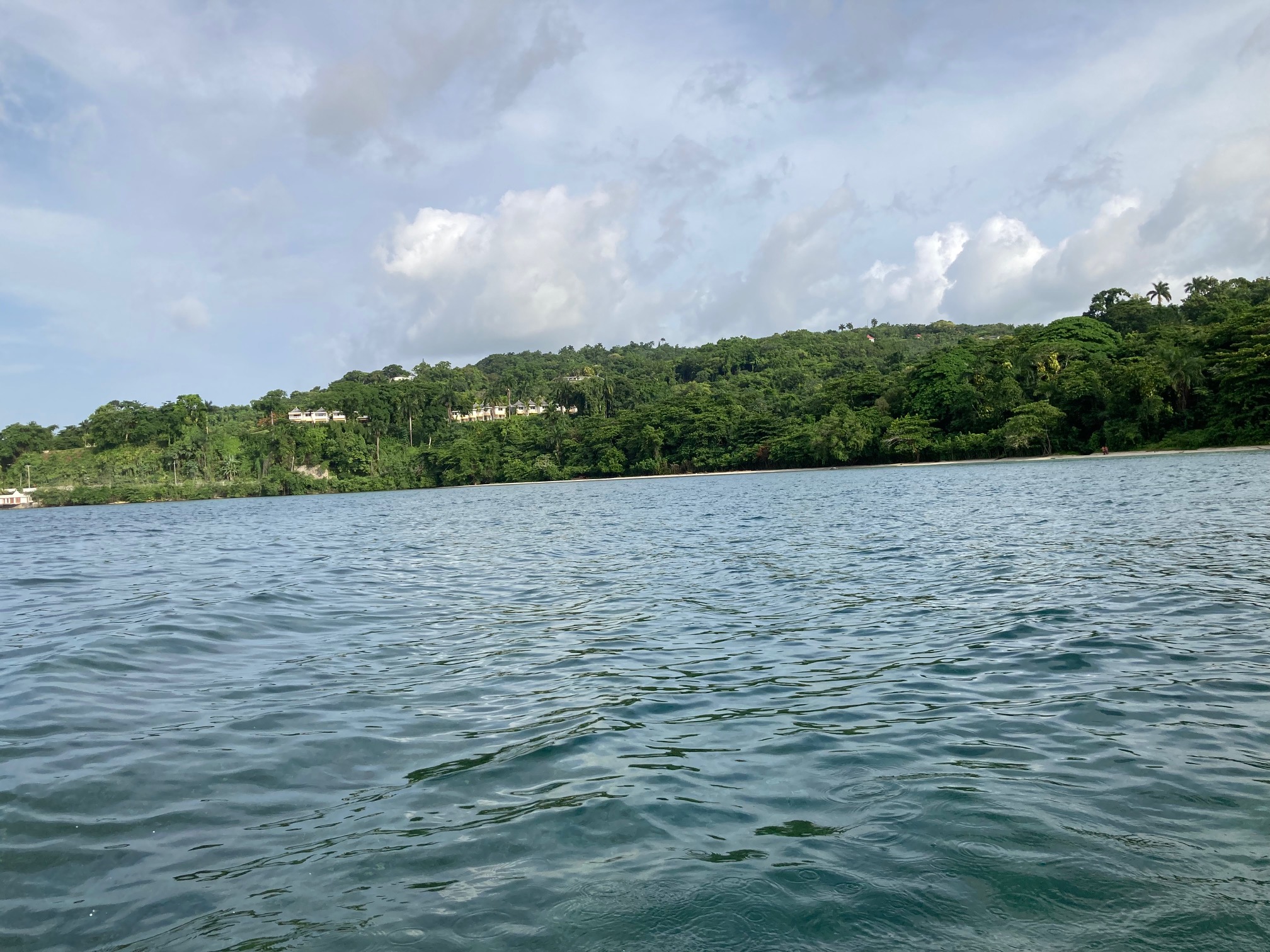
If swimming and being on water is your preference, then there is the Blue Lagoon, a natural favourite for swimmers as the mix of fresh and salt water offers an unusual bathing experience. “They say the lagoon is bottomless but in reality Blue Lagoon is an enchanting spot with deep blue water fed by a fresh water mineral spring. Made famous by a certain Brooke Shields movie and the site of a well-publicised Jacques Cousteau dive, the 52m-deep (170.6ft) 'Blue Hole' (as locals call it) opens to the sea through a narrow funnel, but is fed by freshwater springs that come in at about 40m (131ft) deep,” notes a brochure.


Photo credit: Neil Armstrong      Scenes from the Blue Lagoon and Monkey Islands boat tour


It is here that you can buy something from a vendor before you get on a boat or leave the area. Norman ‘Boxer’ Livingston, a popular boater, seems to be a fountain of knowledge of all the movies shot near the Blue Lagoon and all the Hollywood celebrities that have been guests at suites in the area. He mentions Tom Cruise, Rihanna, Beyoncé among them and notes that Rihanna gave him one of her suitcases. The former boxer has many stories to share about the nearby Monkey Islands too.


Photo credit: Sophia Findlay   Norman 'Boxer' Livingston


The view from the UCC Blue Mountain Coffee Craighton Estate in Irish Town, St. Andrew


Lovers of coffee are in for a treat when they visit the UCC Blue Mountain Craighton Coffee Estate. The estate surrounding Craighton Great House was constructed in 1805 by George Craighton and has been linked to many notable figures in Jamaican history, including two governors general. Craighton Estate is now owned by the Japanese Ueshima Coffee Company which directly manages it and exports most of the coffee beans to Japan. 


Photo credit: Sophia Findlay    Tour guide Jerome Thomas talking about the Blue Mountain Coffee

Photo credit: Sophia Findlay      Coffee beans presentation by Jerome Thomas


The tour by Jerome Thomas includes walking through coffee fields and learning how the plants grow and how the beans are reaped and processed. There is also a moment to sit and learn more about coffee while sipping on some of the world best and a slice of cake. Walking up further on the property will take a visitor to an elevated gazebo where they are over 3,000 ft. above Kingston and have a glorious panoramic view of the mountainscape. Thomas is adept at sharing the history of the property and product, including some punchlines too.


Photo credit: Neil Armstrong      Kingston's skyline from the Kingston Dub Club in the hills of St. Andrew


Kingston Dub Club


Located in the hills of St. Andrew on Skyline Drive, overlooking Kingston, Dub Club is the leading spot for conscious roots reggae music and entertainment in Kingston. It offers a great view of the cityscape and food and liquor are readily available. 


Independence Park


If you have never seen Jamaica’s great athletes such as Usain Bolt, Shelly-Ann Fraser Pryce, Asafa Powell, Herb McKenley, Arthur Wint and others up close and personal, this is the next best — a celebration of them in sculptures by renowned sculptors Alvin Marriott and Basil Watson in Independence Park. How many of us knew that the area is known as Independence Park, has been around since 1966, and includes the National Stadium. A statute of Bob Marley is just across the road from it at Celebrity Park, which is at the corner of Arthur Wint Drive and Herb McKenley Drive.


Photo credit: Neil Armstrong    Bob Marley statue in Celebrity Park, across from Independence Park


Bob Marley Museum 


The Bob Marley Museum is the former home of the reggae legend. Bob’s home is filled with rich memories and treasured mementos, which seek to preserve the life and accomplishment of this great Jamaican and outstanding musician.


Emancipation Park


“The morning breeze ushers in dawn's new light as joggers commence the day's ever-changing cycle. A rare jewel in the heart of Kingston city, Emancipation Park is a refuge for many who seek solitude and a soothing ambience away from the hustle and bustle of daily living. It's an oasis where one can rejuvenate among its lush seven-acre landscape that symbolizes the legendary beauty of the island of Jamaica. Nature lovers can bask in the Park's scenery lined with tropical flowers and trees such as the majestic Royal Palm, its branches stretching outwards beckoning to the skies. Art lovers can appreciate the beautifully crafted 11ft. bronze sculpture "Redemption Song" by celebrated Jamaican artist, Laura Facey that graces the ceremonial entrance of the Park. The opening of Emancipation Park in July 2002 is a significant milestone in the journey of our nation. The Park was created to be a symbol of our Freedom to Hope, to Excel and to Be,” notes ‘Welcome to Emancipation Park: A Tribute to Our Freedom’ at emancipationpark.org.jm 


Photo credit: Neil Armstrong    Tour guide Barbara Beckford at Devon House


Devon House tour and I-Scream


Devon House I-Scream, makers of Jamaica’s premier brand of ice cream has its flagship store at the location. Devon House is home to over 27 flavours including their famous bordeaux cherry, rocky river, strong back, mango, coconut, coffee and soursop and their most popular flavour, the Devon Stout. The ice cream at Devon House was voted the 4th best ice cream in the world by the National Geographic on its traveller's list of top places to eat ice cream in the world.


One of Jamaica’s most celebrated historic landmarks, the Devon House Mansion is the architectural dream of Jamaica’s first Black millionaire George Stiebel. He was among three wealthy Jamaicans who constructed elaborate homes during the late 19th century at the corner of Trafalgar Road and Hope Road which fittingly became known as the Millionaire’s Corner.  Daniel Finzi and the Verleys were the other families that resided in the area, however, both homes were eventually demolished to make way for development ventures, including the construction of Abbey Court Apartments. 


Stiebel’s legacy lives on with the beautifully maintained Devon House, which was declared a national monument in 1990 by the Jamaica National Heritage Trust. Tour guide Barbara Beckford meets visitors at the steps of the entrance and conducts a detailed history of the house and the property.


Harbour View Roundabout Street Food Experience 


The Harbour View Roundabout has been a location for street food vending for over 30 years. The site has become a popular spot which excites the taste buds of many Jamaicans offering a wide variety of popular Jamaican foods such as conch stew, jerk chicken, jerk pork, festival, bammy, oysters, fried chicken and roast breadfruit to name a few. Street food in Jamaica is very popular and has been an important part of Jamaica’s culture.


Kingston Creative Art Walk


The first staging of the Kingston Creative Art Walk took place on May 27, 2018. Organized by Kingston Creative, a local organisation committed to the development of an art district and a creative entrepreneur hub in Downtown Kingston, the walk happens on the last Sunday of each month starting at 11:00 a.m. The Kingston Creative Facebook group has updates.


Kingston Creative Art Walk is a free, guided group walk which includes several downtown Kingston locations showcasing the work of artists in painting, dance, music, fashion and more. Participants get a chance to meet storytellers, singers and dancers and “visit unexpected and hidden places downtown,” notes their website. They also get the chance to buy art and craft from the creative entrepreneurs there.


Some other places you can visit in Kingston


The National Heroes Park

The site was officially renamed the National Heroes Park in 1973 and is now a permanent place for honouring our heroes whose monuments are erected in an area known as the Shrine. 

Another section, reserved for prime ministers and outstanding patriots, adjoins the Shrine area, to the north, notes the Jamaica National Heritage Trust. This is where Louise Bennett-Coverley, affectionately known as “Miss Lou,’” and her husband, Eric “Chalktalk” Coverley; Ranny Williams, Dennis Brown, Mallica “Kapo” Reynolds, Toots Hibbert, Dennis Brown and some other distinguished Jamaicans are laid to rest.


Coronation Market

The largest and most vibrant market in Jamaica, Coronation Market, or 'Curry', accommodates between 6,000 to 8,000 persons per day. Peak days for business are Thursdays, Fridays and Saturdays, notes a story in the Gleaner in May 2010. On a hot day while downtown Kingston, it is a welcoming place to buy a jelly coconut and enjoy the cool coconut water and eat the jelly.


Gloria’s Seafood Port Royal


The name Gloria's is synonymous with good food and great vibes with friends. Located in the historic town of Port Royal, the team at Gloria’s has perfected the art of making Jamaican seafood dishes simply delicious, notes visitjamaica.com


Photo credit: Neil Armstrong    Images at the entrance of the Norman Manley International Airport in Kingston