Thursday, 5 April 2018

Black Canadians Welcome Budget Allocation Recognizing Challenges


By Neil Armstrong

Dr. Christopher Morgan, founder and board member of the Black Health Alliance. Photo contributed

Kwesi Johnson, a community engagement strategist. Photo contributed

Black Canadians are pleased with the allocation in the recently announced 2018 federal budget recognizing the challenges faced by them.

On February 27, Finance Minister Bill Morneau announced funding to strengthen multiculturalism and address the challenges faced by Black Canadians.

“As a first step toward recognizing the significant and unique challenges faced by Black Canadians, the government also proposes to provide $19 million over five years that will be targeted to enhance local community supports for youth at risk and to develop research in support of more culturally focused mental health programs in the Black Canadian community,” notes the budget.

It further notes that: “In addition, with the creation of the new Centre for Gender, Diversity and Inclusion Statistics, the government is committed to increase the disaggregation of various data sets by race. This will help governments and service providers better understand the intersectional dimensions of major issues, with a particular focus on the experience of Black Canadians.”

Dr. Christopher Morgan, founder and board member of the Black Health Alliance (BHA) says it welcomes this first step investment in the critical areas of mental health research and programming for Black youth. 

“Clearly more investments and initiatives will have to be made to address the broad social determinants of health (income, education, housing, violence, etc.), but this is a step forward which has the potential to bolster and compliment provincial and municipal initiatives where they exist and stimulate initiatives where they do not yet exist.”

Dr. Morgan says the BHA remains committed to working with community stakeholders and all levels of government “to bring about the transformational cultural and systemic changes needed to improve the health and well being of Black Canadians and our diverse communities throughout Canada.”

He says the country is in an era of reconciliation in which Canadians and all levels of government must work towards a level of atonement for the historical and ongoing mistreatment and oppression of racialized populations. 

The BHA founder noted that the recent federal budget announcement is a direct result of effective organizing and advocacy efforts on the part of organizations and leadership in the Black community.

These not only increased the level of awareness and understanding of the challenges being faced by Black Canadians but also put forth solutions. 

He says this announcement represents putting into action the Prime Minister’s recent recognition and Canada’s commitment to the United Nations International Decade for People of African Descent and his public admission of the existence and impact of anti-black racism.

Meanwhile, Kwesi Johnson, a community engagement strategist, feels the budget allocation is a step in the right direction.

“When I read that the PM shared some remarks about anti-black racism I thought to myself, well that's nice but I would have liked it more if they come with some funding to address it. Then, I saw the funds and there was the reaction, well, they can always do better, in terms of the amount but this is a start.”

Johnson says he would like to know more about the metrics around what success looks like.

“What supports are going to be put in place to help community activists, animators and activators who have locally developed solutions, but may lack the capacity to build in evaluation or sustainability components that can allow their solutions to evolve rather than capitulate after funding runs out?”

He is not sure if anything has been suggested in term of archiving the projects but says it could be beneficial if part of the evaluating metrics.

He thinks funding should be attached to “a very purposeful and intentional and culturally tailored outcome, research and archiving metrics.” 

The budget notes that diversity is Canada’s strength and a cornerstone of Canadian identity.
“Recent domestic and international events, like the rise of ultranationalist movements, and protests against immigration, visible minorities and religious minorities, remind us that standing up for diversity and building communities where everyone feels included are as important today as they ever were.”

The government proposes to provide $23 million over two years, starting in 2018–19, to increase funding for the Multiculturalism Program administered by Canadian Heritage. 

This funding would support cross-country consultations on a new national anti-racism approach, would bring together experts, community organizations, citizens and interfaith leaders to find new ways to collaborate and combat discrimination, and would dedicate increased funds to address racism and discrimination targeted against Indigenous Peoples and women and girls, the budget notes.

On January 30, Prime Minister Justin Trudeau announced that the Government of Canada would officially recognize the International Decade for People of African Descent.

“The Government of Canada has heard from concerned citizens and organizations from across Canada, including the Federation of Black Canadians, that we need to do more to work with and support Canadians of African descent,” he said.

“In recognizing the International Decade, the Government of Canada commits to a better future for Black Canadians. This means learning more about the issues that affect Black Canadians, including improving research and data collection, so we can better understand the particular challenges they face. Mental health challenges and overrepresentation in the corrections system have been raised in particular by community leaders as barriers to Black Canadians experiencing full and equal participation across society,” Trudeau said.

[This story has been published in the North American Weekly Gleaner, April 5, 2018.]


Diasporic Africans Concerned About the Plight of African Refugees in Israel


By Neil Armstrong

A community meeting organized by the African Canadian Leadership Network at CultureLink in Toronto on March 20, 2018. Photo contributed

The African Canadian Leadership Network (ACLN) says there are many positive efforts from people on the ground in Israel to the situation of African refugees there, but that there is less coordinated engagement from the African Canadian community.

As a result the network recently held a community meeting at CultureLink in Toronto under the theme “The Plight of African Canadian Refugees in Israel: Exploring & Enabling Practical Solutions.”

Amanuel Melles, co-chair of the ACLN, says they have been writing to various leaders in Ottawa about the situation and they want to sustain the engagement around this issue.

He says there are people on the ground in Israel protesting the Israeli government’s action to deport the African refugees.

He notes that it is time to get out of the African Canadian silo and to spread the word about what’s happening to these Africans.

Melles says the state of Israel does not recognize Africans as refugees but as infiltrators.

Since 2006, asylum seekers from Eritrea, Sudan, and other African countries fled ethnic cleansing, persecution, and indefinite military conscription and risked their lives to seek refuge in Israel.

As a Refugee Convention signatory, Israel cannot deport them to their home countries under the non-refoulement principle.

The Times of Israel reports that there are approximately 38,000 African asylum seekers currently in Israel, according to the Interior Ministry. About 72 percent of the migrants are Eritrean and 20% are Sudanese.
“Eritrean asylum seekers fled a harsh dictator and compulsory military service that can last for 40 years. Sudanese asylum seekers fled genocide as well as fighting between Sudan and South Sudan,” it says.
A briefing paper from Canadians Helping Asylum Seekers in Israel and Right Now: Advocates for African Asylum Seekers in Israel notes that Israel’s refugee determination process does not meet the needs of asylum seekers.

It notes that while Eritreans and Sudanese are accepted at rates over 80% in other western countries, less than a dozen individuals have received refugee status and the vast majority have not had their claim reviewed. Israel instead maintains that they are “labour migrants” or “infiltrators” of the state.

The March 20 meeting, which included some Eritreans who were refugees in Israel and recently came to Canada, examined recommendations in a document entitled “Towards Resettlement of a Higher Number of African Refugees from Israel.”

It is calling for the resettlement of 20,000 refugees within five years “which can be achieved through a combination of measures taken by Immigration, Refugees and Citizenship Canada and other government departments.”

The document urges Ahmed Hussen, Minister of Immigration, Refugees and Citizenship, to come up with a special resettlement program or relax the requirements of existing programs, using his ministerial power and under public policy and humanitarian grounds.

The public policy could include: a special resettlement program similar to the Tibetan refugee settlement project implanted a few years ago, an exemption of Eritrean and other Africans from refugee status recognition requirements, and UNHCR referrals and refugee status determination.

They say the policy could also provide additional sponsorship spaces for Sponsorship Agreement Holders (SAHs) dedicated to refugees in Israel and encourage SAHs to sponsor refugees from Israel.

The aim would be to resettle 20,000 refugees to Canada within 5 years while encouraging other countries to resettle refugees out of Israel, as well as requesting Israel to allow the settlement and integration of some refugees, especially those who have established themselves or have strong ties to the country.

They are also calling for the allocation of resources for processing applications and towards post-arrival support.

The allocation would be for offices responsible for processing resettlement applications in and outside of Canada.

It would enhance the capacity of settlement agencies or community groups who assist in the settlement of Eritrean and other African refugees by providing additional financial resources.

The additional resources would also encourage members of the Jewish, Eritrean, African and other Canadian communities, institutions and businesses to work together and offer emotional, social and settlement assistance to enable refugees settle successfully in Canada.

The ACLN is a broad coalition of African Canadian leaders committed to advancing the cause of successful integration and settlement of continental Africans.

Given the scale and urgency of the problem, they strategized about how to get the word out about the plight of these African refugees in Israel.

They will be reaching out to the Black Caucus in Parliament, the Federation of Black Canadians, the legal community, students on university and college campuses, faith groups and media.


Sunday, 25 March 2018

Black Financial Professionals Discuss Diversity and Inclusion on Bay Street


By Neil Armstrong

From left: Julian Franklin, Naki Osutei, Hazel Claxton, Andre Nunes, Tiffany Gooch and Delofante Atkins at the panel discussion, 'Black on Bay Street - Diversity & Inclusion.'


The Canadian Association of Urban Financial Professionals (CAUFP) wrapped up its No Boundaries Conference on March 23 with a panel discussion, “Black on Bay Street – Diversity & Inclusion,” at the Arcadian Court in Toronto.

Throughout the day participants convened in breakout sessions under the conference’s theme “The Future of Financing” to focus on emerging trends that are changing finance.

Writing on the future of finance in the day’s program, CAUFP notes that: “The World Economic Forum contends that disruption in the financial sector will not be a “one-time event,” but more a “continuous pressure to innovate” that will change the long-term structure of the finance industry.”

The panel included: Naki Osutei, director, partnerships & engagement, TD Bank; Hazel Claxton, EVP & CHRO, Morneau Shepell; Andrew Nunes, partner, Fasken; Julian Franklin, SVP/MD, Geometry Global; and Tiffany Gooch, consultant, Enterprise & Ensight Canada moderated by Delofante Atkins, manager, talent & inclusion, Matrix360.

Discussing what is means to be black on Bay Street, the centre of Toronto’s financial district, Gooch said it was a matter of using her access to create space for more people to be there too.

Nunes said it is being in a position of great opportunity but also of great responsibility and trying to make a path for those who are coming behind.

Claxton said while growing up in high school and when she entered corporate Canada she was the only black person. She learned how to navigate but it didn’t feel very different from the world she grew up in.

Franklin said he always felt that he belonged on Bay Street and that it was about being comfortable in his own skin.

Regarding misconceptions by their peers in the workplace, Nunes said there is the idea that he is the exception to the rule and that most other black individuals can’t do what he does. He noted that it is an uphill battle to climb “once we get in the door.”

Franklin said microaggression is an interesting thing and sometimes people can be pigeonholed which is tough to break. There is unconscious bias, he said, but he thinks organizational agility is keen in the workplace.

Claxton said her workplace is very male-dominated and what she learned, as an introvert, is that there is a bias towards extroverts over introverts.

Being an introvert and a woman meant she had to think about how she was going to operate differently. She had to strengthen her voice and so she did so through joining Toastmasters and other organizations.

Responding to a question about creating opportunities for other black individuals in their workplace, Osutei said sometimes there is fear and hesitation about coaching people who are coming up.

“We need mentors across the board and for different reasons,” she said.

Osutei referenced an instance in which she was championing covertly an intern in her workplace but tried not to get too visibly close to the person for fear that her colleagues would accuse her of preferential treatment.

The young black woman, who might have thought Osutei was cold towards her, was eventually hired and became a very good employee of the company.

Both Claxton and Nunes spoke about the importance of mentorship and sponsorship in the workplace.

“We have to be willing to be sponsored and nurtured by others,” said Nunes, noting that he had an unexpected mentor who wasn’t black.

Claxton, who plans to retire at the age of 58 this year, underscored the value of mentors and sponsors who help people in the workplace to understand the unwritten rules.

Franklin emphasized organizational agility, that is to use what is good out of those institutions to “pole vault” to where you want to be.

Gooch thinks it is important to focus on building the most authentic relationship as possible.

The CAUFP is a member-based resource organization providing a link between corporations and the black communities through education, information, and programs to facilitate economic empowerment.

For the past 20 years, the organization has established itself as a centre of excellence for the advancement and inclusion of black leaders in the Canadian financial services industry.

“We serve members and a network from across the GTA who are involved in a diverse range of finance-related professions, law, real estate, and consulting among others. While our mandate is focused on the black community, our membership and past Board members continue to include the broader visible minority community,” notes the CAUFP.

The organization held a “Black on Bay Ball” event last night to celebrate its 20th anniversary and to conclude its weekend of activities.

Wednesday, 21 March 2018

Jamaican Author Garfiel Ellis Believed in the Power of Knowledge


By Neil Armstrong

Photo contributed       Garfield Ellis at the Miami Book Fair International.
 

Garfield Ellis, 57, author of six books, believed in the power of knowledge and that was something he gave to his children.

The effervescent writer passed away peacefully of cancer at the Scarborough General Hospital in Toronto on March 16 surrounded by his family. He was born on July 25, 1960 in Central Village, St. Catherine.

His daughter, Fiona, 25, says he was ill for many years and was diagnosed with a tumour that was inoperable.

“He would give the clothes off his back to help somebody who he loved. He loved really big. He loved with his whole heart.”

She says he always wanted to impact the next generation and would give his children books for birthdays.

“He wanted us to be well read and well learned and he thought that was the way to change our future,” said Fiona, who has two brothers, Garfield 27, and Odane, 20.

In November, Ellis received the Una Marson prize at the 2017 Lignum Vitae Awards in Jamaica for his work, ‘Land We Love.’

“Through his illness and to his final days we had people calling us from all around the world telling us stories of how he helped them and changed their lives and what a mentor he was for them.”

She wants people to remember him as “a man who loved life, he had a search for knowledge, he was in love with literature.”

He was a very happy man and someone who was “smiling from ear to ear” with a signature “from the bottom of his belly type of laugh.”

Like her father, Fiona, who studied mental health and theatre at University of Toronto, has a love for literature.

After reading Marlon James’ novel, ‘Book of Night Women,’ she told Ellis that she wants to be Lilith in a play.

He suggested that she write her own and now she is aspiring to be a playwright, and to one day write a novel in tribute to him.

Ellis was the eldest of nine children, all born in Compound and grown up in Spaulding Gardens, Central Village.

His mother, Mable Oates, still lives in that community while his father is deceased.

Joan, his wife, says she met Ellis many years ago when they went to live in Eltham View and remained friends even while he went away to study.

“It was just one of those friendships that you know you have a bredren around the corner – it was that and it blossomed,” she says.

“He was an exception father, loved his children to death, and he was always a caring and a giving person.”

She said Ellis had a magnetism that people couldn’t help but fall in love with him.

“We spent the better part of two weeks at the Scarborough General and when he passed all the nurses came to his room just to bid him farewell. He had that sort of impact on people.”

They were in Jamaica for Christmas and Joan said when friends came to visit them the stories they told made her ask herself: “Am I married to this man?”

Ellis worked with the Caribbean Maritime Institute as a marine engineer and was active in the church.

One friend told him that he was his hero and made his love the sea because he grew up in Central Village and when he saw him in church his mother old him “this is the guy who you want to emulate.”

Joan said Ellis was from a poor family but they were all ambitious and he was a motivator and like a second father to his siblings.

“My heart is broken but I still feel this overwhelming gratitude to have had this life, to share with this man. He was exceptional,” she said.

A memorial service will be held in Canada but Ellis wants to be buried in Jamaica.

“I want to go back home because even going to that church [Christ Temple Apostolic Church] some youngster might just come and see what my life has been like and be a better person,” he told his wife.


Ellis studied marine engineering, management and public relations in Jamaica and completed his Master of Fine Arts degree at the University of Miami, on full scholarship as a James Michener Fellow.

He won the Una Marson prize twice, and also won the Canute A. Brodhurst prize for fiction 2000 and 2005, and the 1990 Heinemann/Lifestyle short story competition.

Ellis is the author of six published books: Flaming Hearts, Wake Rasta, Such As I Have, For Nothing at All, Till I'm Laid To Rest, and The Angel’s Share.

On Facebook, writer, Olive Senior described Ellis as a talented writer, and Itah Sadu, owner of A Different Booklist, said she visited him the night before he died.

“Happy that I had the opportunity to tell him that he will always be with us as we read and read his brilliant novels, writings, etc. He was a gifted man, a griot, a teacher and the coolest brother.”

She said he spent his honeymoon in 2013 at the Black and Caribbean Book Affair reading from his novel.

This story has been published in the North American Weekly Gleaner, March 22-28, 2018.

[ A Memorial Celebration will be held at the Covenant Funeral Home, 2505 Eglinton Avenue East, Scarborough on Saturday, March 24, 4:00-8:00 p.m.]


Film About Jamaican Farmworker Generates Discussion


By Neil Armstrong

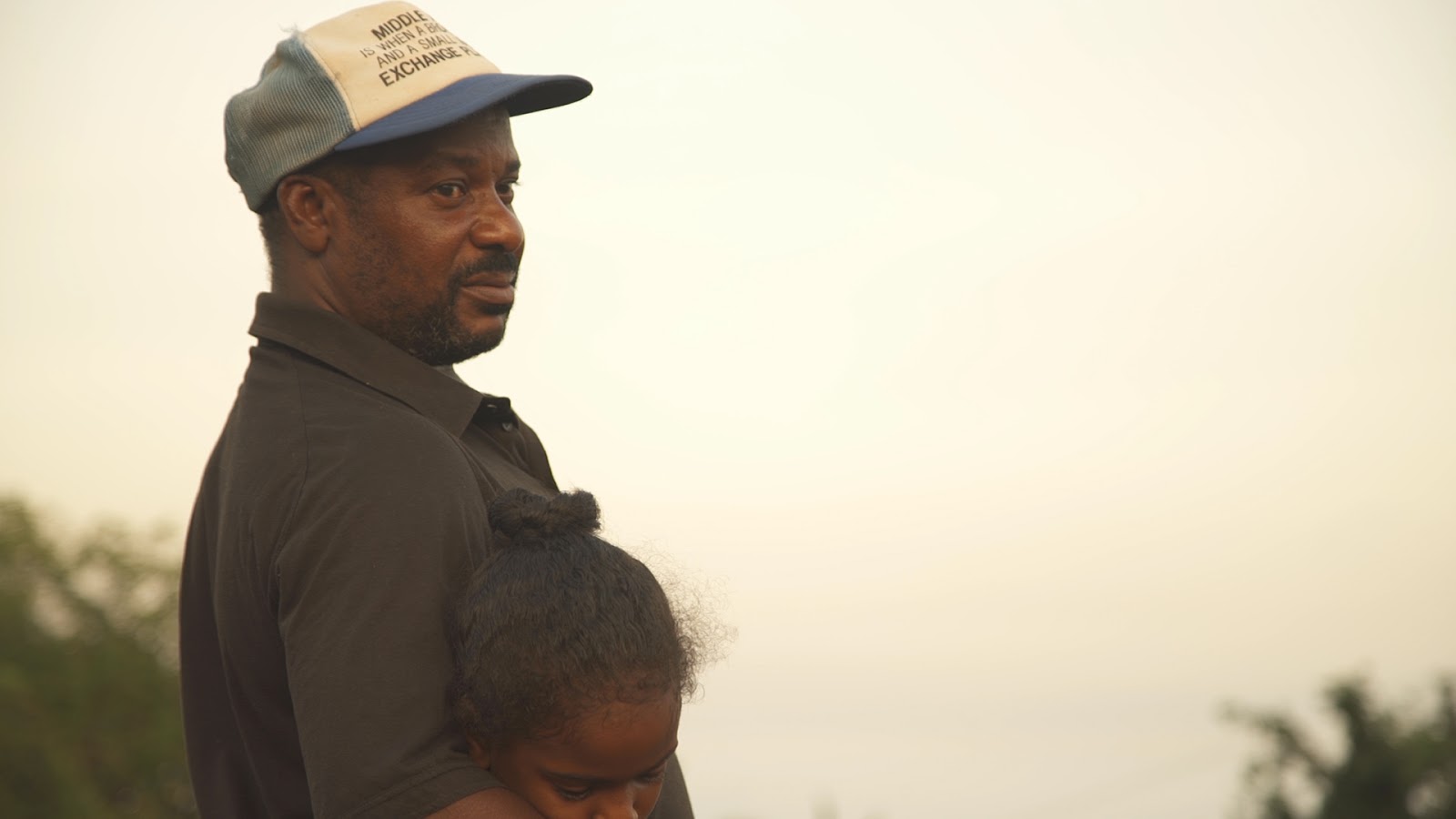
Photo contributed   A still from the documentary 'Babe, I Hate to Go' by filmmaker, Andrew Moir.

A Canadian short film about a Jamaican farmworker was the subject of a recent panel discussion held at a university in Ontario to celebrate Black History Month.

Andrew Moir, 27, a producer and documentary filmmaker, was part of a panel at Brock University in St. Catharines where his 2017 film, ‘Babe, I Hate to Go,’ was screened on March 1.

The film tells the story of Delroy Dunkley, 52, a farmworker for 30 years, who usually spends six months every year working on farms in southwestern Ontario to support his family in Jamaica.

As the only breadwinner for his wife, Sophia, and six children, Dunkley, who works on a tobacco farm, discovers that he has cancer but keeps it a secret from his family. He subsequently died in 2015.

Moir knew Dunkley for about ten years before he started making the film because the Jamaican worked on his uncle’s farm in Mount Brydges over that time.

“Delroy was my uncle’s right-hand man,” he says.

Moir says when he graduated from film school six years ago he wanted to make a documentary portrait of the farm where his uncle worked because tobacco farming in southwestern Ontario is a dying way of life.

Over the first year of shooting he got to know Dunkley much better and it was shortly after, in 2014, that Dunkley was diagnosed with cancer.

“That’s where it began, this slow shift to make a documentary about him and his family and base the story more in Jamaica,” says Moir noting that he had been working on the film for the past five years.

He says the short film that was released last year is a small chapter in a much larger story.

Moir travelled to Jamaica five times over three years to shoot the film in Top Hill, St. Elizabeth.

He became very close with Dunkley’s family and was there when he passed away.

Moir said after he stopped shooting the film and had time to process what was going on he asked himself larger questions about the Seasonal Agricultural Worker Program (SAWP).

He said the program is integral to Canada’s agricultural economy and a big part of the Jamaican economy. He thinks there is always room for improvement with the program.

The film was finished in the spring of 2017 and premiered at the Hot Docs Canadian international documentary festival. It went on to different film festivals in the world.

‘Babe, I Hate to Go’ premiered on CBC in July and garnered a lot of attention on the internet. In November, it was released on Facebook and Moir said that’s when a lot of Jamaicans started watching. 

Photo contributed        Filmmaker, Andrew Moir, participated in a discussion at Brock University where his documentary, 'Babe, I Hate to Go,' was screened.

Another panelist, André Lyn, a social justice advocate, has visited several farms across southern Ontario to engage with the farmworkers who work in Canada yearly under the SAWP.

He says what the documentary showed that is hardly spoken about is that these men actually have families and they are connected to them.

“They don’t just come to Canada, earn money, send it back, go back to see them for about four months. It showed an intimacy that we don’t regularly see. It showed humanness that is a big piece of their life.”

Lyn says in the SAWP they are just seen as these precarious, disposable workers who come and work, get some money and go back home and kind of fade until the next season they come back.

“It raised the point, which we know, about them not showing the vulnerability of being sick. It took him [Delroy] a while to really acknowledge that he wasn’t well. There’s a particular fear around that because the minute you are not well and your employers know, the likelihood that you could be repatriated is so high.”

Lyn said Dunkley willed himself to be healthy enough to continue working because he knew he had a family.

“The piece that is uncommon too is the compassion and care that the employer had of him because he could have been sent home almost immediately when he wasn’t well and probably not working as hard as expected.”

Lyn noted that there is no pathway to citizenship for the workers and that it was written in the bilateral agreement back in 1966 that “they did not want these black men to be staying in Canada because they didn’t want them to be cohabitating with the white women.”

Many of them have been coming to Canada for more than twenty years, eight months every year.

Lyn said they pay into Employment Insurance, Canadian Pension Plan, and income tax but have very limited access; they no longer get parental benefits.

He said one of the things that as advocates, researchers and anybody who supports the workers know is what the workers have told them explicitly –“As much as we want things to change and to have improvements, please do not jeopardize our current income.”

A Jamaica Information Service report of a send-off ceremony for farmworkers in Kingston in January quotes Shahine Robinson, Minister of Labour and Social Security, saying the government is committed to the creation of jobs for all Jamaicans, noting that for 52 years, the SAWP has steadily provided employment opportunities for Jamaican workers.

She noted that for the 2017 calendar year, a total of 9,367 workers travelled to Canada, both under the SAWP and the Low Skill Programme.

[This story has been published in the North American Weekly Gleaner, March 22-28, 2018.]

Audience Gets a Preview of Upcoming White Privilege Conference at Ryerson


By Neil Armstrong

Photo credit: Clifton Li  From left: Jeewan Chanicka, Rinaldo Walcott, Denise O'Neil Green, Eddie Moore, Jr. and Ritu Bhasin at 'Soup and Substance' at Ryerson University on March 12, 2018.

As Ryerson University gets set to host the White Privilege Conference Global –Toronto from May 9-12, interested individuals had an opportunity to participate in a sneak preview of it.

At its regular ‘Soup and Substance’ series on March 12 in POD 250, Jorgenson Hall, the Office of the Vice-President, Equity and Community Inclusion presented a discussion with some of the speakers at the conference. This will be the first time that the conference is held outside of the United States.

The title of the event was: “Are Canadians Too Polite? Addressing Global Perspectives on White Privilege and Oppression in Canada and Beyond.”

Dr. Eddie Moore, Jr. founder of the White Privilege Conference; Ritu Bhasin, president of Bhasin Consulting Inc. and a leadership and diversity specialist; Jeewan Chanicka, superintendent of equity, anti-racism and anti-oppression at Toronto District School Board; and Dr. Rinaldo Walcott, associate professor and director of the Women and Gender Studies Institute, University of Toronto fielded questions from Dr. Denise O’Neil Green, vice-president, equity and community inclusion.

“There’s been quite a buzz I would say across the country, in terms of the concept of white privilege and just privilege in general, within our country going all the way to BC, to Ontario. Across the nation and around the world events are occurring that are impacting our campus, our communities in very diverse ways,” said Dr. Green.

The aim of the conference is to explore how Canadian politeness impacts existing challenges with privilege and oppression.

In defining white privilege, Moore said it is an honour and privilege, a perk someone receives simply because of their skin colour.

“At the White Privilege Conference we cover the concept of privilege comprehensively. We believe that everybody has privilege and we’re just affected by it in very different ways. And white is a perk associated simply with skin colour as well as other privileges as far as class, race, gender, so and so forth.”

Moore, who created the conference twenty years ago, said it is something that is far bigger than him and it was a desire to create a space where these kinds of conversations can happen.

He said as a practitioner learning the professoriate and doing a PhD he was going to conferences and presenting at them, but he felt they were all diversity conferences.

“I like entry level 101, 201, but I felt like diversity was the only topic where we were staying at the basic level,” he says noting there was no growth process so he wanted to create a place to grapple with issues at the highest levels when it comes to diversity.

He said what they realized after nineteen years is that white supremacy is actually a global phenomenon.

“I know that there are some differences in the way things play out here in Canada than they do in the States but the fact that people walking around in the US thinking racism doesn’t exist has some strange similarities to what you’re talking about.”

He noted that the fact that even people of colour are afraid to talk about this is not something that’s just happening in the US.

“So we felt like this would be the right time to actually take the White Privilege Conference on a global journey to be in partnership with folks who are really willing to grapple with the highest level.”

Moore said what he has learned putting on the conference is that “when you’re really good at this work people will put your life in danger and so that’s been the greatest threat as the father of a 7 year old and 6-month old.”

“But the one thing I vow for the remainder of my life is I will not be afraid of white supremacy. I’m just not going to let it dominate my life.

“We need more white folks committed to understanding white supremacy and I’m not one that always believes white privilege is bad. I think actually you can do some good things if you understand privilege.”

Photo credit: Clifton Li  In conversation from left are: Eddie Moore, Jr., Ritu Bhasin, Jeewan Chanicka and Rinaldo Walcott.


Bhasin attended the conference, for the first time, six years ago and heard a speaker talk about how white supremacy is the ideology that white people are better than people of colour and people from indigenous communities and white privilege is how it manifests.

“It’s the manifestation or examples that we see in our day-to-day interactions and systemically where white people are given unearned privileges or advantages based simply on the colour of their skin.”

She said there were about 2,000 people, majority of whom were white, who came to understand systems of supremacy, power and privilege.

“By attending the conference it unlocked for me ideas and a spirit and a philosophy I had repressed in me since I did my undergrad and was in school in university. Because I entered into the workplace and corporate world, and in teaching diversity and inclusion to corporate Canada, US, globally, I had started to minimize and sanitize my own message.”

She said the White Privilege Conference “unlocked it, it revealed it, it was always there within me cause I was talking about it on evenings and weekends and it just basically changed my frame of teaching permanently.”

“For me, attending the White Privilege Conference personally has been transformative. It literally has changed the way I teach and think and present my ideas.”

Bhasin said conference presented an avenue where she could finally talk directly and openly and safely about the fact that white supremacy permeates every part of her existence and the existence of the collective – people of colour and people from indigenous communities.

She could do this with people who get it “or may not get it but are wanting to get woke, or wanting to be part of the solution and not the problem.”

The other thing that the conference did for her was to brings into the space “intersections – an area that we don’t explore in a lot of other diversity and inclusion, and equity and equality circles.”

Chanicka focused on the “way that privilege plays out in the context of the systems and structures that govern us.”

“When we think about the fact that this part of Turtle Island that was colonized and today we call it Canada, the people who colonized this part of Turtle Island had particular beliefs about the people and the land that they colonized.

“It included Indigenous People being uncivilized and so they had to take them away from the land and civilize them through residential schools. Interestingly enough, as they took them away from the land that allowed the creation of land as a resource to be commodified as well.”

He said privilege plays out and intersects in many ways and those people who colonized the land created the legislation “that we follow today, those beliefs permeate everything.”

Chanicka said everyone has varying amounts of privilege and noted that he has male privilege and there are things that he will never have to think about that women will always have to think about and people who identify as women.

“The thing about privilege, when we talk about it, is that your privilege does not make you a bad person but recognizing that privilege exists is an important thing.

“I don’t want you to feel bad that you’ve never had to have these experiences but recognize that though we share the same world we do not share the same experiences of the world.  And when we can have these as academic conversations -- which are great because it helps to change things -- I also want you to recognize that for some of us it ain’t academic. We don’t get to check out at 5 o’clock and go home and kick up our legs. We live this every single day, every minute, every moment that we walk down the street we live this.”

Chanicka debunked the myth that having these conversations will divide people.

“We were already divided. All the people who were saying that they are shocked that these things are going on in Canada, there is no shock when you have had to live this -- there is no shock.”

Commenting on a piece he wrote in the Huffington Post about the burden of the oppressed, he said it is “that we have to live the oppression, we have to identify that the oppression exists, we have to then convince you that it exists, we have to worry about your feelings because we’re convincing you that we’re suffering at the hand of the oppression. And then we have to come up with the solutions for it. That is the burden of the oppressed.”

He wants individuals to start from a place of what they bring into the conversation and then “think about how we can centre the most marginalized voices.”

Dr. Walcott said white privilege is about the accretion and the ways in which all of the structures put into place, post-Columbus, come to accrue to a particular way of white people being able to move through the world.

“For me, you can’t really think about white privilege without really seriously combatting the accreted histories of colonialism, of transatlantic slavery, of land theft and of ongoing forms of colonization that continue to force people to move around the globe.”

He said what is important and always difficult is “on the one hand we have to be able to be clear and critical of the structures that continue to support the history of that kind of European colonization, and at the same time we also have to recognize that structures function through people.”

“How do you begin to make sense of how individuals and structures work to reproduce a world where some of us are fundamentally shut out?”

Walcott said there is a particular order and regime of the world that presents itself in white, hetero-identified men and from there the rest of it flows.

“For the kind of question, like how do we think about the benefits of white privilege, we can see them all around us in terms of questions of leadership in our institutions, leadership in our political public sphere. We can see them as I like to say continually in the ongoing commotion of white male mediocrity that gets passed off to us as brilliant, as significantly contributing and so on.”

He said this is also seen in the ongoing ways in which “we’re now involved, especially in universities, as institutions in debates around freedom of speech and freedom of expression.

“The logics of white privilege and white supremacy logics ask us to not notice certain kinds of practices and structures. And the work of those of us who are trying to think these questions do is to make clear how those structures are working. What they put into place? What they ask us to contend with and what they ask us to be silent about.

“And so the work of thinking through this is to excavate how that works, is to turn it over, to open it up in the most glaring fashion to scrutiny and it’s in fact when we open these things up to scrutiny that then the logics comes of we’re into division.”

Agreeing with Chanicka, he said “you can’t divide something that’s already divided, you can’t tell people who are not invited to the table that the table is there for them when the door to the room with the table is locked.”

Both Walcott and Chanicka referenced the election of Doug Ford as leader of the Ontario PC Party in their analysis of white privilege.

Dr. Walcott said human life can be organized differently.

“This is not a work simply about excavating and showing up structures that are exclusive, that are violent and so on. This is work which deeply open the sense that we’ve got ideas of how to organize human life differently.

“Human life doesn’t have to be organized in this way, that we can organize human life in more egalitarian, collective, communal ways and that there are cultures still with us that have done that over time. What we have here is a kind of contest of how we’re going to live together in the present and in the future and what that will mean.”

After a symposium at Brock University in St. Catharines in 2016, the full conference is making its international debut with its first appearance in Canada at Ryerson.

The university aims to lead transformative and solutions-based discussions about the impact of privilege as it relates to issues that focus on, and that go beyond race.

“The colourblindness of how we want to be doesn’t help us really come to grips with being more advanced in the area of equity, diversity and inclusion. We don’t want to be stuck at the level 101, we want to advance further,” said Dr. Green in her introductory remarks.

For more information about the White Privilege Conference Global – Toronto, visit www.ryerson.ca/wpc-global.

[A shorter version of this story has been published in the North American Weekly Gleaner, March 22-28, 2018.]

Sunday, 18 March 2018

Some Upcoming Events in Toronto in March, April and May 2018


The 2018 Toronto Storytelling Festival which started March 2-4 continues March 19-25 at various venues in the city, including A Different Booklist at 777-779 Bathurst Street. Among the storytellers are: Gcina Mhlophe, a well-known South African freedom fighter, activist, actor, storyteller, poet, playwright, director and author; Sharon Shorty of the Tlingit, Northern Tutchone and Norwegian people, from the Raven Clan and raised in the storytelling tradition of her southern Yukon community; Duane Gastant’Aucoin, a Wolf/Yanyedi member of the Teslin Tlingit Council, and more. www.torontostorytellingfestival.com

The African Canadian Leaders Network presents a community meeting on “The Plight of African Refugees in Israel,” on Tuesday, March 20, 6:00-9:00 p.m. at Culture Link, 2340 Dundas St. West, Toronto. (Across from Dundas West subway station). Check Eventbrite for more information

The Urban Alliance on Race Relations will hold its AGM at Toronto City Hall, Committee Room 4, on Wednesday, March 21, 5:30-6:30 p.m. The UARR has partnered with the Toronto York Labour Council and National Council of Canadian Muslims to hold a public forum, “Access to Justice: Solidarity and Action,” 7:00-9:00 p.m.

Description
Access to justice is the most pressing issue facing Black, Indigenous and racialized communities in Canada today. But are we moving forward? How can we work in solidarity to ensure our communities are centered in the justice system? Join us for an evening with local activists and change-makers to explore strategies for sustaining our energies and working in solidarity to impact systemic change.
SPEAKERS:
Idil Abdullahi - Ryerson University School of Social Work and Black Legal Aid Clinic
Lisa Myers - Indigenous Artist and Educator
Azeezah Kanji - Noor Cultural Centre, Toronto Star
MODERATOR
Shree Paradkar, Toronto Star race and gender columnist
ACCOMMODATION & EVENT INFORMATION:

To request accommodations, please contact info@urbanalliance.ca by March 19, 2018. The venue is wheelchair accessible and has all-gender washrooms. Check Eventbrite for more information.

Black Business and Professional Association presents the “Black Roots Bear Fruits: The History of Black Businesses” on Friday, March 23, 4:00-7:00 p.m. (Opening Reception); Saturday, March 24, 10:00 a.m-5:00 p.m. and Sunday, March 25, 10:00 a.m.-4:00 p.m. at 180 Elm St., Toronto.

“For the love of Haiti,” a fundraising event, will be held on Saturday, March 24, 6:30pm at Malvern Methodist Church, 2 Morningview Trail. Toronto. Call 416-903-5192

Communities for Zero Violence presents “March for Our Lives” on Saturday, March 24, 10:00 a.m.-1:00 p.m. Starts at Toronto City Hall, march to University Court House Plaza.

Dr. Gervan Fearon, President & Vice-Channcellor, Brock University


Canadian Association of Urban Financial Professionals (CAUFP) celebrates its 20th anniversary with a "Black on Bay Gala" on Saturday, March 24, 7:00 p.m. at the Arcadian Court, 401 Bay St., Toronto. Keynote speaker: Dr. Gervan Fearon, President & Vice-Chancellor, Brock University. Hosted by Justice Donald McLeod.

Dr. Avis Glaze, recipient of the UWI Vice Chancellor's Award.


The 9th annual University of the West Indies Toronto Benefit Gala will be held on Saturday, April 7 at The Ritz-Carlton, Toronto. Ambassador Susan E. Rice will receive the Luminary Award; Raptors head, Masai Ujiri (G. Raymond Chang Award); YMCA (Chancellor’s Award); and the Vice Chancellor’s Award recipients are: Dr. Victor S. Blanchette, Dr. Avis Glaze and Dr. Michael S. Pollanen. www.uwitorontogala.com

The Jamaica Diaspora Crime Intervention and Prevention Task Force presents a town hall meeting on how the diaspora can aid in Jamaica’s crime-free future on Saturday, April 7, 3pm at the JCA, 995 Arrow Rd., Toronto. Guest speakers: Pearnel P. Charles, Minister of State in the Ministry of National Security; Lloyd Wilks, Consul General; and Dr. Rupert Francis, Global Task Force Lead.


Just Think 1st presents “Disrupt the Disruption” City Popup on Saturday, April 7, 12:00-5:00 p.m. at Toronto Reference Library, 789 Yonge St., Toronto. An afternoon of food, conversation, prizes and more. Register at justthink1st.com. Free Admission

Marlon James at the Toronto Reference Library with Prof. Hyacinth Simpson of Ryerson University.

ROM Speaks features a keynote presentation by Toronto-based poet, writer and lawyer, NourbeSe Philip on Tuesday, April 10, 7:00-9:30pm, Doors open at 6:30pm. Reception to follow at Royal Ontario Museum, Queen's Park Rotunda, Level 1. https://www.rom.on.ca/en/whats-on/zong


Operation Black Vote Canada in partnership with several black organizations presents the Black Community Provincial Leaders Debate with Kathleen Wynne, leader of the Ontario Liberal Party and Andrea Horwath, leader of the Ontario New Democratic Party on Wednesday, April 11, 6-9pm at the JCA, 995 Arrow Rd., Toronto. Moderated by Royson James. Register at https://www.eventbrite.ca/o/operation-black-vote-canada-17105059092


Authors Marlon James and David Chariandy will be in conversation on Tuesday, April 17, 7:00-8:00 p.m. at the Bram & Bluma Salon, Toronto Reference Library, 789 Yonge St. James will discuss his work and career with Chariandy, author of the novels “Brother” and “Soucouyant.” https://www.torontopubliclibrary.ca/detail.jsp?Entt=RDMEVT331781&R=EVT331781

The second annual Canadian Reggae Music Conference will be held on Friday, April 27, noon-9:00 p.m. and Saturday, April 28, noon-6:00 p.m. at Metro Hall, 55 John Street, Toronto. Free Admission. www.rastafest.com [On Friday evening, I’ll host a conversation with keynote speaker, Lloyd Stanbury, entertainment attorney, music business consultant and author of “Reggae Roadblocks: A Music Business Development Perspective” published by Abeng Press in 2015.]


The 2018 Jamaica National Group Expo will be held on Saturday, April 28 at the Pearson Convention Center in Brampton, Ontario and on April 30 in Montreal, Quebec. Jnexpo.ca

The Black Business and Professional Association (BBPA) presents the 36th annual Harry Jerome Awards on Saturday, April 28 at the International Centre Conference Centre, 6900 Airport Road, Mississauga, Ontario.

White Privilege Conference Global – Toronto (WPC Global – Toronto) will be held May 9-12 at Ryerson University. WPC Global-Toronto will unpack the concept of white privilege, as well as address the often problematic and dominant narratives that operate throughout our society. Through a series of workshops and panel discussions led by international thought leaders, we’ll share strategies for tackling these challenges, as well as those that go beyond race. Do you want to help build a more inclusive world? WPC Global – Toronto is for you. Register today! www.ryerson.ca.ca/wpc-global #WPCRyerson #WPCGlobalToronto
This is presented by the Office of the Vice-President, Equity & Community Inclusion.

The Diner's Corner in Toronto started their Buffet Brunch recently. This is the spread they offer on weekends. Enjoy!