Thursday, 16 February 2023

Black History Showcase will Celebrate Canada’s All-Black Unit During World War 1

By Neil Armstrong


Photo contributed    Chris Campbell, Vice President, Carpenters Union Local 27 and Director of Equity, Diversity and Inclusion, Carpenters' Regional Council


Several construction trade unions and partnering organizations are collaborating with Afroglobal Television to honour the No. 2 Construction Battalion, Canadian Expeditionary Force, during World War 1 as the highlight of their Black History Month celebration, which will be presented by the media company and hosted by the Carpenters’ Union.


Chris Campbell, vice president of Carpenters Union Local 27 and director of equity, diversity and inclusion at Carpenters’ Regional Council, says its theme this year is “Honouring the Past, Inventing the Future.”


“The Carpenters Regional Council stands in solidarity with our Black community members, Black Canadians, and all people of African descent. We are proud of the contributions they have made and continue to make to build our Union and our country. We strive to promote equity, diversity, inclusion, and a sense of belonging for all people within our organization.”


Campbell says at its celebration on February 23 at 6:30 p.m. at the Bellagio Boutique Event Space in Concord, Ontario, the Carpenters’ Union will present replicas of the $20 Fine Silver Coin commemorating and recognizing the contributions of the No. 2 Construction Battalion of Nova Scotia as these were fellow comrades in the construction field. 


The keynote speaker will be Jean Augustine, who in 1993 made history as the first African-Canadian woman to be elected to Canada’s House of Commons as the Member of Parliament of Etobicoke-Lakeshore. She served with distinction winning four consecutive elections until she decided to move on to new challenges in 2006.


An article about the No. 2 Construction Battalion written by Lindsay Ruck in the Canadian Encyclopedia indicates that it was the largest Black unit in Canadian history. 


“On 9 July 2022, Prime Minister Justin Trudeau apologized on behalf of the federal government to the descendants of No. 2 Construction Battalion for the systemic racism experienced by members of the battalion. In the ceremony at Truro, Nova Scotia, he also announced that the Royal Canadian Mint would honour the battalion with a commemorative coin for Black History Month in February 2023,” notes the article which was initially written in June 2016 and updated in August 2022.

At the end of last month, the Royal Canadian Mint announced the release of the coin on its website and paidhomage to the No. 2 Construction Battalion with the following preamble.

“They served with distinction, and they were willing to risk their lives to preserve the very rights and freedoms that weren’t always afforded to them before, during and after the First World War. From the unit’s formation in 1916 until its disbandment in 1920, the members of No. 2 Construction Battalion—the largest all-Black battalion-sized unit in Canadian military history—persevered in the face of anti-Black racism to provide vital support to Canada’s war effort, by assisting Canadian Forestry Corps (CFC) lumber operations in France.

“This 99.99% pure silver coin honours the brave men who served in No. 2 Construction Battalion and brings to light their often-overlooked contribution in the First World War. Despite racial prejudice, the members of No. 2 Construction Battalion persevered in their determination to serve, and a century later, their legacy remains an inspiration.”

The Royal Canadian Mint notes that it is Coin #5 in their annual Commemorating Black History series, which celebrates the achievements of Black Canadians and highlights the struggles that are an important part of Canada’s story.

This is the first coin to highlight Black military history in Canada and the experiences of Black Canadian soldiers,” it said.


The Royal Canadian Mint certifies all of its collector coins, including this one, which has a limited mintage of just 5,500 coins worldwide.

The reverse design of this coin, by artist Kwame Delfish, features a soldier of No. 2 Construction Battalion, standing at attention between two railroad tracks. His battalion’s cap badge is prominently displayed on his right, adjacent to a landscape of France’s Jura region, where the battalion assisted with logging and building a railroad. To his left, battalion comrades marching in a parade prior to their March 1917 deployment to Europe, notes a press release from the Royal Canadian Mint.

“The existence and accomplishments of the men of No. 2 Construction Battalion is another part of Canadian history that is to be acknowledged, celebrated and honoured forever,” said artist Kwame Delfish. “I hope I was able to capture these honourable men in a way that represents their strength and resilience, while also raising awareness about the important role that No. 2 Construction Battalion had in the Canadian armed forces.”

The obverse of the coin features an updated obverse design that will appear on 2023 collector and bullion coins until a new permanent obverse is adopted on Canadian coins.  The Susanna Blunt-designed effigy of Queen Elizabeth II, set against a repeating maple leaf-patterned background, is accompanied by a special marking consisting of a vertical inscription of the dates “1952” and “2022”, separated by four pearls symbolizing the four effigies that have graced Canadian coins throughout the reign. 


The cost of the $20 coin is $99.95 and there is no GST/HST and, in terms of packaging, the coin is encapsulated and presented in a black Royal Canadian Mint-branded clamshell with a black beauty box.


“In 1916, Canada set an ambitious target of one-half million recruits and the number of available white volunteers was dropping. Thousands of blacks had volunteered but [had] been rejected. Official government policy stated that “There is no colour line; coloured battalions are not to be raised; coloured men are to be allowed to enlist in any battalion of the Canadian Expeditionary Force”,” write Ken Alexander and Avis Glaze in their book, Towards Freedom: The African-Canadian Experience.


Despite this, they were shut out at recruitment offices but, according to the book, renewed their attempts to form all-black regiments.


“Black Canadian leaders persisted and, in what was viewed as a human-rights victory, forced the issue to be debated in the House of Commons. Finally, authorization was given for the creation of an all-black unit. In 1916 the Nova Scotia No. 2 Construction Battalion was formed, its black soldiers recruited from across Canada. Clearly, this was a compromise move by Ottawa, but an important first step for blacks,” notes the book.


Alexander and Glaze write that the battalion was a concession. “Barring blacks from enlisting was deemed anti-democratic. The only solution was to give them a regiment of their own, albeit one ruled by white officers. It was a temporary measure which allowed the Canadian military to circumvent more difficult issues of inclusion and integration. Once again, it appeared that exceptions would be made during war-time, but after the conflict ended the status quo returned.”


In the book, My Name’s Not George: The Story of the Brotherhood of Sleeping Car Porters, Stanley G. Grizzle notes that: “The Nova Scotia No. 2 Construction Battalion recruited into its service 850 men from across the country, mainly Nova Scotia and Ontario. The Officers were all white. The No. 2 Construction Battalion served overseas in England and France but were never allowed into battle.”


Alexander and Glaze write that between 1914 and 1918, “black Canadians at home were actively involved in the war effort. Black associations, on their own and in cooperation with white groups, launched fundraising campaigns and distributed propaganda leaflets. Some black agencies were founded specifically to help Canada during these years of crisis.”


In her book, Emancipation Day: Celebrating Freedom in Canada, Natasha L. Henry writes: “During the First World War, dozens of Windsor’s Black men enlisted in the all-Black No. 2 Construction Battalion in 1916, whose duties included logging, milling, and shipping.” These Black volunteer militiamen were allowed to serve as non-combat troops in the battalion. 


In a later edition, Henry notes that the construction unit’s duties included building roads and bridges, defusing land mines, logging, shipping, and milling. “Later, Black men were able to enlist in racially integrated units in the Second World War.”


Alexander and Glaze further state that even though “several blacks served with distinction in white regiments, there was never any intention of allowing the “No. 2s” into battle.”


The Nova Scotia Archives underscores that the No. 2 Construction Battalion was “the only Canadian battalion composed of Black soldiers to serve in that war, and indeed, the only predominantly Black battalion ever, in Canadian military history.” The battalion was authorized on July 5, 1916.


Campbell, who is also a member of the George Brown College Foundation Board of Directors, will announce the new $100,000 endowment scholarship for Construction and Trades students at George Brown College.


The Chris Campbell Perseverance Award will support full-time students enrolled at the Angelo DelZotto School of Construction Management and the School of Apprenticeship and Skilled Trades at the Centre for Construction and Engineering Technologies. 


These programs offer hands-on training that provide the technical expertise and the skills critical to excel in these industries. Furthermore, this award will highlight and recognize the achievements of BIPOC (Black, Indigenous, People of Colour) students in these programs, who demonstrate passion and commitment to their field of study through their extra-curricular activities, volunteer work, and involvement in the classroom.


Campbell has always encouraged youths to start a career in the unionized construction skills trade industry that provides a liveable wage, pension, benefits, training, and a sense of pride for being a part of building the province. 


With the support of the District Council of Ontario — which has over 30, 000 members — Campbell decided to establish the scholarship to assist young people pursuing a training certification course, diploma, or degree studies in the construction industry or labour studies. 

“Thirty-three years ago, I was fortunate to walk through the doors of the United Brotherhood of Carpenters and Joiners of America (UBCJA) to start a career as a first-year apprentice at the 64 Signet Drive office. This is an opportunity to give back. It's another chance to "walk the talk " of making a difference for many years to come for the local communities,” says Campbell.


Donations can be made to the scholarship fund and tax receipts are available for eligible donations.


The Black History Showcase on February 23 at 6:30 p.m. is presented by Afroglobal Television, Carpenters’ District Council of Ontario, the Painters Union, the Plumbers Union, and other partners. Silvertrust Media and the Transformation Institute for Leadership and Innovation are the principal project development and implementation partners. It is free to attend by requires registration or RSVP at info@afroglobaltelevision.com


The event will also be featured on the Afroglobal Television network, which is on Rogers 708, Bell 2472, Eastlink 886, Ignite 884, Telus 2701 across Canada. The broadcast special will also be on OMNI Television, courtesy of Rogers Media. It will be subsequently available on demand on various platforms.


Thursday, 22 December 2022

Dub Poet Clifton Joseph Adapts to Changing Times

By Neil Armstrong


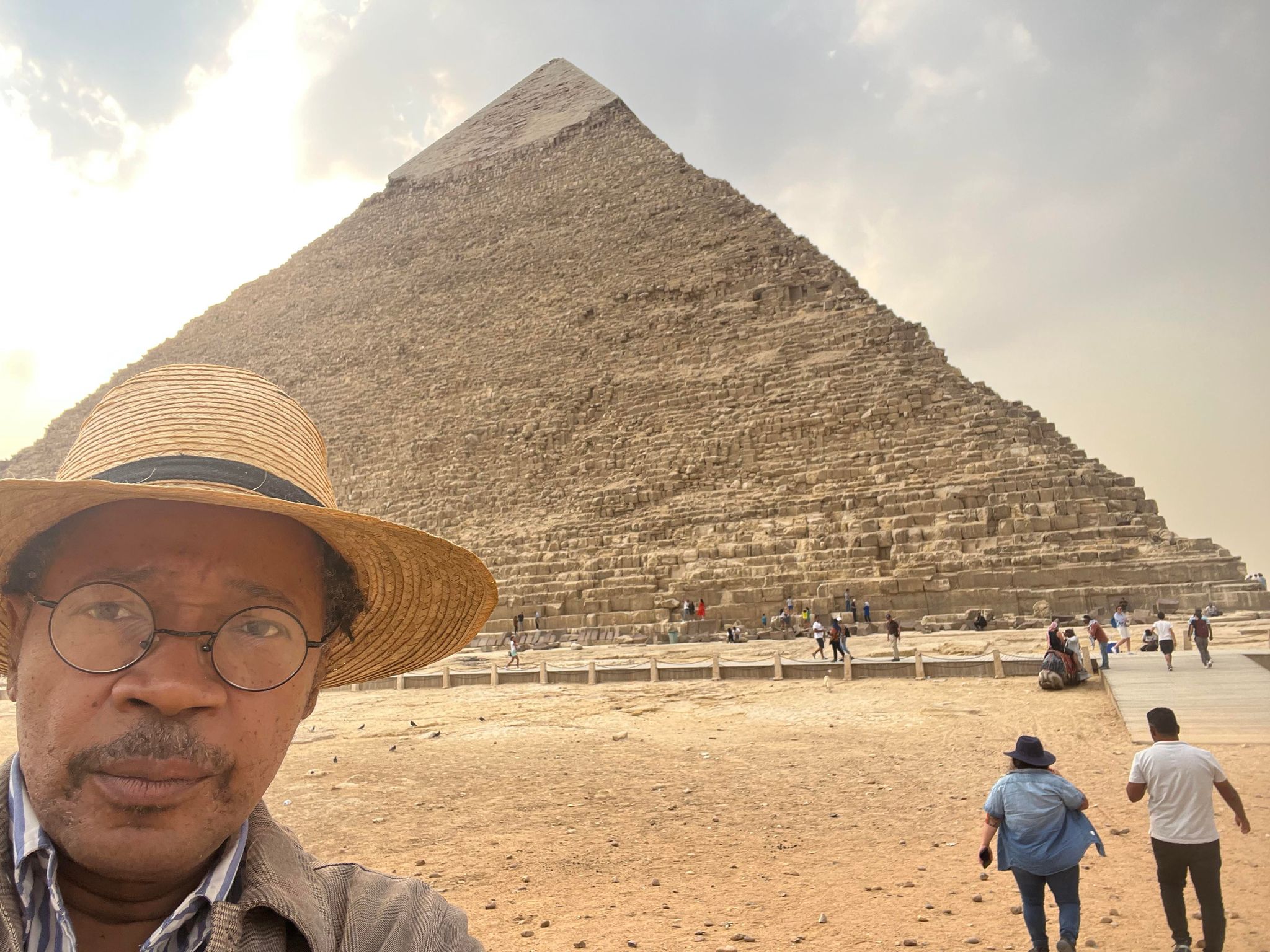
Photo contributed      Dub poet Clifton Joseph at the Tania International Poetry Festival in  Egypt


Dub poet Clifton Joseph can easily adapt to new situations as evidenced in his recent tour of Egypt, France, Germany, and the United Kingdom.


While performing at the 8th annual Tanta International Poetry Festival in Tanta, Egypt, he quickly shifted from his scheduled routine to include poems showcasing the range and mastery of his voice.


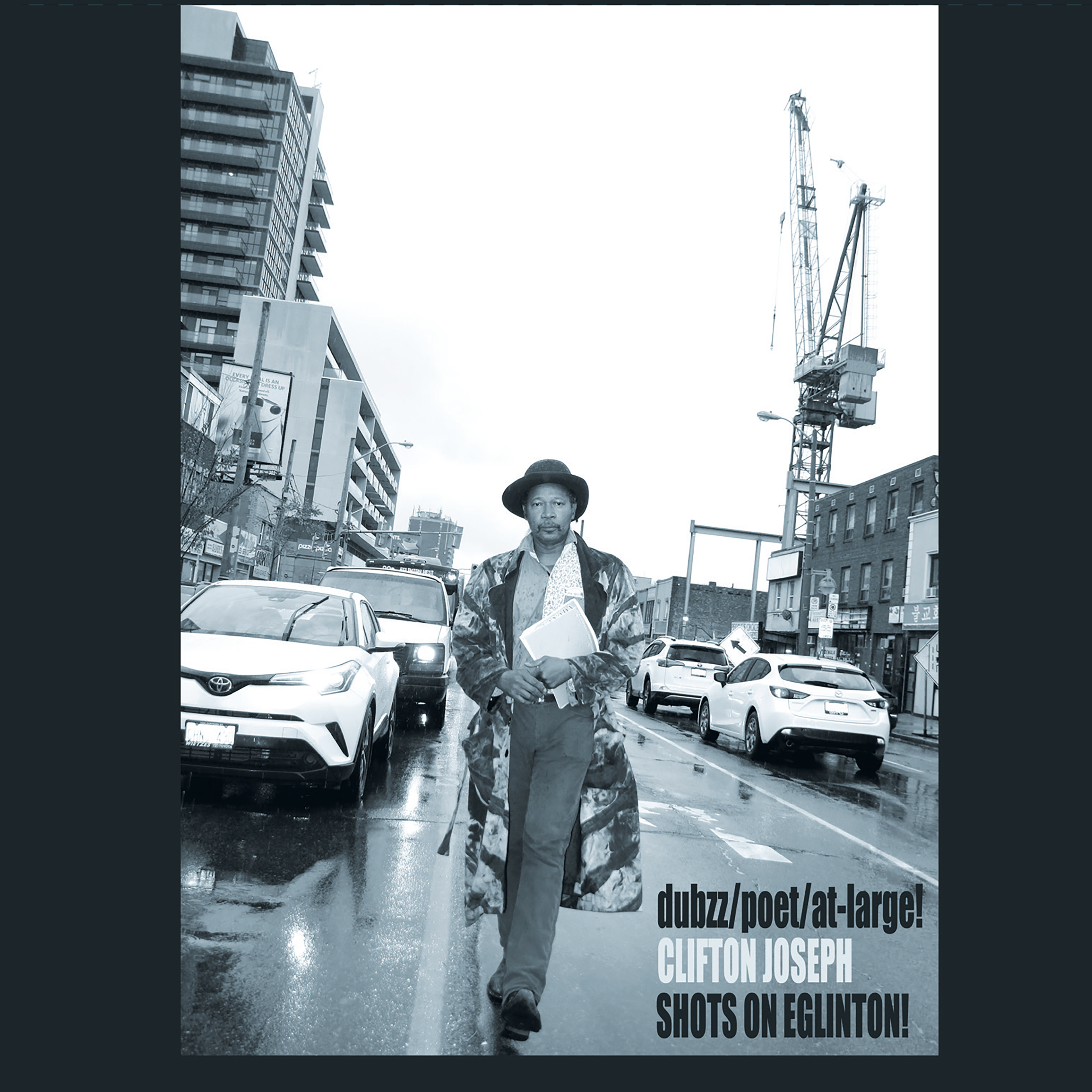
This adaptability also meant that during the pandemic he seized the opportunity to record his new album, Shots On Eglinton, featuring 11 compelling spoken word selections ranging in subjects from gun violence to corporate greed to paying tributes to jazz legends Billie Holiday and Thelonius Monk.  The pieces are complemented by myriad music forms, including jazz, bebop, hip-hop, calypso, drumming, funk, and blues. 


Having officially launched it on October 22 at the Melody Bar inside the Gladstone Hotel in Toronto and done a few performances in Canada, Joseph soon set off for his international tour in November.


Starting in Egypt where he spent two weeks, he performed at the international poetry event in Tanta where poets headlined at Tanta University, a library, and their performances were complemented by a giant screen in the background transcribing their work from English, Spanish, and other languages, to Arabic.  


“I got mobbed at the Tanta University; I had a handler, 22-year-old dude, and down there they called me Mr. Clifton,” says Joseph enthusiastically about his experience at the festival. 


Although he could not understand the Arabic poets — whose works were not transcribed in English, French or other languages — the veteran wordsmith relied on the saying “poetry is the universal language.” Joseph decided to concentrate on their expressiveness, in terms of intonation, diction, veracity in their voice, gesticulation, and their pacing. “I couldn’t tell you exactly what they said but I was surprised I was actually able to get the essence of what they were saying in their poems.”


He also performed at Al Kotob Khan, an independent publishing house and bookshop in Cairo. Before leaving the capital of Egypt, Joseph visited the Great Sphinx of Giza and the Great Pyramid of Giza and was in absolute awe of them.


His stay in Paris, France, for a week included his performance at the SpokenWord Paris, which has been happening for 16 years, — “the most prestigious reading series in the country,” says Joseph. From there, he performed in Hackney, London, and Hay-on-Wye in Wales, a town world renowned for books and bookshops.


Photo contributed        Clifton Joseph at the Great Pyramid of Giza in Egypt


While back at his base in north Brixton, he travelled to Southampton for a performance, and also met up with Jamaica-born, Britain-based dub poet and activist Linton Kwesi Johnson.  


Johnson is putting together an anthology of his own articles and essays, and also working with the George Padmore Institute collecting British works and international poetry in the spirit of Pan Africanism and George Padmore. 


The George Padmore Institute (GPI) was set up in 1991. It grew out of a community of people connected with New Beacon Books, Britain's first black publisher and bookshop, and its founder John La Rose. The Institute is an archive, educational research and information centre housing materials and documents relating mainly to black communities of Caribbean, African and Asian descent in post-war Britain and continental Europe.  


During his downtime in London, he met up with a friend who he used to perform poems with in high school and university, reconnected with a Syrian poet he met in Tanta who lived in London, and also visited Brixton Market and Electric Avenue, which Eddy Grant’s 1983 song “Electric Avenue” highlights in response to riots in London.


Soon Joseph was off to Berlin, Germany, where they were launching the celebrations of the 50th anniversary of the book, How Europe Underdeveloped Africa, by Dr. Walter Rodney. Joseph performed at the launch and held a two-and-a-half-hour workshop. 


His 18-hour journey involved flying from the Billy Bishop Toronto City Airport to Montreal-Pierre Elliott Trudeau International Airport, and then to Doha, Qatar, and from there to Cairo, Egypt. The return trip was from Berlin, Germany to Reykjavik, Iceland to Boston, to Toronto.


Photo contributed     Clifton Joseph and veteran British dub poet Linton Kwesi Johnson


Photo contributed        Clifton Joseph performing at the Whiskey Blue Lounge in Southampton, London


Now back in Toronto, the Antigua-born "dubzz/poet/at/large" is focused on selling his album and working on twoupcoming books: one will be Shots On Eglinton with the lyrics from the album, the other will be Dubzz, a coffee table publication with selected poems, photographs and visuals.


“During the pandemic, all artists were scrambling with how do we redo ourselves so most of us jumped to the internet. If you didn’t have a website, you need to get a website together, and you’ve got to put your stuff out on Spotify and iTunes and SoundCloud and all of that.”


With distribution channels down, and venues down, Joseph decided to revisit some poems from his collection of recordings and include some newer poems he had done before the pandemic hit. 


Realizing that he had put 11 poems together, he was planning to name the album "Dubzz," similar to his moniker, but then with all the gentrification and Eglinton Crosstown LRT construction activities happening on Eglinton Avenue West — and his poem "Shots on Eglinton" which he had done years ago when there was a spate of shootings on the block, — he decided to make the title one that ruminates on the popular neighbourhood where he lives. 


Joseph originally wanted to write a poem as a tribute to the community talking about “the jerk guys on the other side of the road and on the weekends they come out with big sound system, and all of the tropical foods and the women and men dressed up in their finery and the colours, and the Black tourists come in and fearful of the area but loved it too much and might have lived there for sometime or had somebody or some relative and come for their patty or oxtail, curry goat and jerk chicken and eat in the cars and just watch the people come by — we call them the Black tourists — from Peel, Keele, Durham, wherever.”


Taking all that into consideration, Joseph says his poem "Shots On Eglinton" and the album cover image by photographer Michael Chambers of him in the middle of traffic on Eglinton Avenue — an image similar to the iconic photo of James Dean in New York City in the rain with the cigarette and the trench coat — made him settle on the album’s name after seeing the convergence of his poem and a photographic shot taken along the urban strip.


Some of the selections on the new album were done over 15 years ago. Regarding the tributes to Billie Holiday and Thelonious Monk, Joseph says dub poetry is generally associated with reggae music and reggae drums. 


“But I’m a small island guy from Antigua come out of the steel band and calypso culture and when I got to Toronto I got into funk and jazz so the reason I call myself a dubzz/poet/at/large was to identify the ‘zz’ on dubzz, to add the jazz intonations and the Bluenote and jazz and improvisations onto it. Jazz has been a major part of my poetic aesthetic, which has led me to more sonic explorations of just the power of the voice as orchestra, which is what I try to do at the best of times. I am my own musical accompaniment.” 


In "Recollections: A Seventees Black RAP" written by Joseph in Althea Prince’s collection of essays, Being Black, he charts the path of his arrival in Canada in 1973, his education, growth of political and social justice consciousness, and the power of music — disco, funk, soul, calypso, reggae, jazz, blues, gospel — and the anti-imperialist fervour that he shared with other Black youth in Toronto during that time.


When Joseph says he is his own musical accompaniment, his statement underscores Klive Walker’s description of the poet in Dubwise: Reasoning from the Reggae Underground. “As a performer, recorded or live, Joseph’s voice suggests a saxophone that honks, squeals, squawks, or rigs out orthodox melodic sentiments in a fusion of reggae-tinged “funkaiso” accents. As a rebel-word artist, his verse boogies to the syncopated beat of rich metaphors and a sharp wit.” Walker also shares some of the musical influences and influencers of calypso, funk, jazz poetry and roots reggae that impacted Joseph’s works.


Joseph says the Shots On Eglinton album is a retrospective of what he had not released with any fanfare and he has put them all together to show the range of his approach to dub poetry.


Taking on the name 'dubzz/poet/at/large" happened when he was working with Devon Haughton’s 'Bangarang Productions' in public relations and Oliver Samuels was a staple of it.


When Samuels came out with his series, Oliver You Large, Joseph loved the name so much that he decided to add “at large” to his name making it "dubzz/poet/at/large."


Joseph says the approach to poetry is “incendiary and it also means that the poetry has to get out there and that poets have responsibility to make their works get out to a crowd.”


This is the reason many will find him performing in various venues throughout the country. In January and February 2023, Joseph will perform in Montreal, Halifax and Vancouver, and there are plans to perform in the Caribbean too.


Joseph has a new single, "Subterranean Dub," a 45 RP and vinyl single that he will be pushing.


“The thing about the travel too is that it made me able to put those poems to bed as such and reinvigorate the creativities so that new works can come so its really sparked not just the poetry, in terms of bringing on new work, but also sparked ways of me realizing the internationalization of the work,” he says while reminiscing on his tour.


This signalled the importance for him to get out of town, out of what Joseph calls the “strictures of this city and the province and the country” and to find other ways of distribution and sales.


Joseph has a website, cliftonjoseph.com, where he sells his new album and he has come up with the idea that, “if you can’t come out to the show, the show will come to you.”


This involves hiring him in your houses, apartments, or if you rent a place and gather friends and family and request a reading of his first book published in 1983, Metropolitan Blues, or perform his first CD from 1989, Oral/Trans/Missions, or perform his new CD, Shots On Eglinton, or to do a combination of all three, questions and answers, a workshop on dub poetry and his own journey, or more — he will make it happen. Oral / Trans / Missions was released digitally to all streaming platforms for the first time via CDBaby on August 31.


“I’ve literally taken the poetry on the road and to people’s houses,” says Joseph who is a co-founder alongside Lillian Allen and Devon Haughton of De Dub Poets, the group that started Canada’s dub poetry movement. 


REVIEW OF SHOTS ON EGLINTON ALBUM


Opening with the titular "Shots on Eglinton," which is repeated later on, Joseph shines a light on gun violence claiming the lives of young Black men and the resulting anguish in the community while the violence continues. "Slo Mo" maintains the focus on gun violence undergirded by jazz while "Where Are The Politicians" infuses elements of the keteh drum to provide a critical eye on politics and whether people’s concerns are really addressed. "Not Poem" interrogates the systems dumbing down matters of importance to people and presents an analysis of the media publishing celebrity news, among other things.


"(That) Night in Tunisia" showcases Joseph’s dexterity with words when he references “when metaphors like meteors showered and soared like incandescent light.” In "Intense Paranoia (& -High Anxiety)," the persona/poet declares that nobody can understand him.


"Poem for Billie Holiday (What A Li’l Moonlight Will Do)" recorded live at the Imperial Pub in downtown Toronto is Joseph’s take of Holiday’s 1935 "What A Little Moonlight Can Do" celebrating her mission to ‘sing’ and ‘swing’ the realness of Black life in her songs. 


"Chant for Monk (Bounce)" infuses elements of bebop, calypso, hip-hop and scratching to reveal the wide palette of music forms and musical instruments from which the poet draws inspiration. Joseph is clearly a fan of the American jazz pianist and composer Thelonious Monk and his improvisational style. 


Shots On Eglinton is a clarion call to people to not be afraid to ask the hard questions of those in authority about the essentials of life and their humanity. 


Thursday, 15 December 2022

New Book of Poetry by Lorna Goodison Celebrates Two Influential Women in Jamaican Music

By Neil Armstrong


Poets Lorna Goodison and Canisia Lubrin at the 43rd Toronto International Festival of Authors at the Harbourfront Centre in Toronto


Poet Lorna Goodison says one of the women she writes about in her new book of poetry, Mother Muse, “tek a set on me” to tell her story and so with that intense persuasion she had to accede.


This was what she shared in an interview with fellow poet Canisia Lubrin in October at the 43rd Toronto International Festival of Authors at the Harbourfront Centre in Toronto.


In her first poetry collection to be published in Canada in over nine years, Goodison celebrates a wide cross-section of women — from Mahalia Jackson to Sandra Bland but focuses on “two under-regarded “mothers” in Jamaican music: Sister Mary Ignatius, who nurtured many of Jamaica’s most gifted musicians, and celebrated dancer Anita “Margarita” Mahfood.”


“These important figures lead a collection that seamlessly blends the personal and the political,” notes a synopsis of the book.


Goodison reimagines the lives of Sister Ignatius, Anita Mahfood and Don Drummond and in so doing creates a history lesson of their connection to Jamaican music and the important roles they played in it — and how the paths of Sister Iggy and Margarita may have crossed. She brings them to the fore early in the collection in the poem, ‘New Year’s Morning 1965,’ which references the killing of Mahfood, Drummond’s role in it, and Sister Ignatius’s work at Alpha Boys School:


Sister Iggy, as deejay, played the speeches of Malcolm X

for young Black men she helped master musical instruments.


Hail Iggy’s students taking our own home-grown music

all over the known world! She loved Don like her own.


In ‘The Poet and Margarita,’ the poet is in a state of uncertainly regarding whether she should write about Margarita.


No disrespect my sistren

I do not want to write 

about you.

I’m done with your tragic

woman story.


But the poet is compelled to write, especially after hearing from Margarita that: 

It’s because you are

so easy to cry

I want you

to tell them

for me.


Goodison explores police brutality, colonialism, emancipation, the current reckoning with issues of race and racism, matters affecting the Windrush Generation in Britain, and shares nostalgia too for times/occasions/places such as Christmas Market, Good Friday, and her now defunct primary school, All Saints, and a childhood friend. 


Mother Muse is published by Signal Editions , the poetry imprint at Véhicule Press. It was nominated for the Derek Walcott Prize in 2021.


In March 2023, Véhicule Press will publish another book by Goodison —Redemption Ground: Essays and Adventures.


“In her first-ever collection of essays, poet and novelist Lorna Goodison interweaves the personal and political to explore themes that have occupied her working life: her love of poetry and the arts, colonialism and its legacy, racism and social justice, authenticity, and the enduring power of friendship. Taking its title from one of Kingston's oldest markets, Redemption Ground introduces us to a vivid cast of characters and remembers moments of epiphany—in a cinema in Jamaica, at New York's Bottom Line club, and as she searched for a Black hairdresser in Paris and drank tea in London's Marylebone High Street. Enlightening and entertaining, these essays explore not only daily challenges but also the compassion that enables us to rise above them. They confirm her as a major figure in world literature,” notes a synopsis of the book by the publisher.

Goodison was Jamaica's Poet Laureate from 2017 to 2020 and was the recipient of The Queen's Gold Medal for Poetry in 2019. 


She is the author of numerous books of poetry and short fiction. Her acclaimed memoir, From Harvey River: A Memoir of My Mother and Her People was a finalist for the Charles Taylor Prize and the Trillium Award, and won the B.C. Award for Canadian Non-Fiction. 


Her Collected Poems appeared in 2017. She lives in Halfmoon Bay, British Columbia. 


Monday, 5 December 2022

Minister Wants the Black Community to Know About Affordable Housing Initiatives

 By Neil Armstrong


Ahmed Hussen, Canada's minister of housing, diversity and inclusion, speaking at Blackhurst Cultural Centre - The People's Residence in Toronto


Ahmed Hussen, Canada’s minister of housing, diversity and inclusion, says since he made an announcement at the site of the Mirvish Village in 2019 there have been subsequent increases in the budget for affordable housing which includes bringing a Black Canadian lens to what is done through the National Housing Strategy.


He was speaking at a press conference at Blackhurst Cultural Centre – The People’s Residence in Toronto where the Centre, in partnership with WoodGreen Community Housing, the housing agency of WoodGreen Community Services, Westbank Corp. and the City of Toronto, announced an initiative that enables affordable housing for Black cultural creators in the new Mirvish Village.


“I hope this is a signal that our government is making sure that the National Housing Strategy works for everyone and that means making sure there are affordable housing options and opportunities to leverage federal dollars to work with organizations like WoodGreen, the City of Toronto, Westbank and our community members. And that those opportunities are not only considered but also prioritised.”


The minister mentioned programs that came about because of COVID, such as the Rapid Housing Initiative, to which they have applied a Black Canadian lens to make sure that they reflect both in the proponents and in the people moving into those units that they represent the diversity of Canada “but particularly addressing the disproportionately higher core housing need present in Indigenous and Black Canadian folk throughout our country.” 


In February this year, on the first day of Black History Month, Hussen announced $50 M to help create housing for Black Canadian communities. The funding is available from 2022 to 2028.


He says that money is available to the community and he keeps repeating that because “we need to use it. In addition to that, there are many other programs that can encourage and enhance the ability of communities to really do what they do best.”


Hussen also mentioned the game-changing Canadian Housing Benefit which provides direct rental supplements to people who need it. He noted that it is now live in all ten provinces and three territories. 


“Unfortunately, not everyone knows about it so again we’re doing amazing things in response to the calls to action by the community. But when those things actually happen it doesn’t come back to the community so I use these opportunities and others, in media interviews to really spread the awareness about programs like the Canada Housing Benefit, and the Rapid Housing Initiative.”


 The project stream of the Rapid Housing Initiative is $1B to 100% fund housing through a federal grant that is opening up on December 12.


Interested parties will have 90 days to apply.  Minister Hussen said there are only two conditions to that funding and it is the only program in the National Housing Strategy where the federal government will fund the entire project as a grant, not as a loan. 


The two conditions to access that fund for a non-profit are: “you have to either renovate or build in 12 months which means buying up a hotel or putting modular housing or building from scratch if you can finish in 12 months. And we mean 12 months for people to actually move in. And the second condition is you have to target one or more vulnerable populations and, of course, Black Canadians are listed as part of those priority groups.”


The online portal will open on December 12, 2022 and it will close on March 12, 2023.


The minister referenced the Rental Construction Financing Initiative, which was used to build the project in Mirvish Village, and the Affordable Housing Innovation Fund that encourages ideas and prototypes. 


“The government has funded apps, prototypes of different forms of building affordable housing and any ideas that lead to more access to affordable housing for any population is theoretically possible and can receive funding,” he said, noting that the budget for the National Housing Strategy is now over $86B.


A group photo of those who attended the press conference at Blackhurst Cultural Centre on November 22 about affordable housing for Black cultural creators in Mirvish Village


Tyson Parker, vice president, experiential development at Westbank, said the company made the commitment seven years ago to continue the amazing heritage that the Mirvish family had created — a place of inclusion, a place of tolerance — at the street corner of Bathurst and Bloor.


“Mirvish will hopefully open very, very, soon; I’m going to say maybe the second quarter of 2023.”


Itah Sadu, managing director of BCC, said as an organization when they looked at community building and capacity building it was important that as they move forward they bring others along with them because that is the whole point of human existence. 


“When the new block is open, you will hear accents across the block that will reflect the experience of people of African descent, people of the Black experience, people of the Caribbean ancestry right across the block,” said Sadu who is excited about the Centre moving to 756 Bathurst Street in the new development. 


She said one day Ian Gillespie, the head of Westbank, came to visit the cultural centre and as he was reimaging the block, “it entered into our conversation that we could even be bolder in our efforts as we move people forward. Oftentimes, we have heard so many conversations about the lack of space, the lack of affordable space, the lack of space for artists to create, people are moving to Hamilton just to get space to create, but we say, hey, you can create here, even in the city of Toronto.” They thought about opportunity and started a conversation with Westbank. 


Sadu said they reached out to WoodGreen because they had the expertise and the capacity to elevate the Centre’s idea and vision.


Mwarigha, vice president, homelessness services, enterprise asset sustainability and development, at Woodgreen says 12 units is a beginning but the vision is at least 50 because that is the kind of scale that begins to make a lot of sense. 


Over the past year, the cultural centre, Woodgreen Community Housing and Westbank have been working on the plan that will provide 12 units — one-bed, two-bedroom, and studio — at 80 per cent average market rate dedicated for Black cultural creators.


 "As we move forward to our permanent home in the new Mirvish Village, we have sought ways to bring others along with us on this journey as we build community and capacity. This is a proud moment for Blackhurst Cultural Centre and we thank WoodGreen Community Housing and its team for their due diligence and expertise. Westbank can also be commended for embracing the vision,” said Judith Brooks Chair of the BCC.


The mission of the cultural centre is to create a world-class model for preserving and building on the historic cultural identity of evolving neighbourhoods and to provide opportunities for Canadians and visitors to Canada to celebrate and engage in the rich cultural legacy and history of Canadians of African and Caribbean ancestry. 


Kevin Ormsby, founder and artistic director of KasheDance, is excited by the news and thinks it is timely and should have happened before because Black people have contributed to that Bathurst community for a very long time.  


“And so it’s really important to also provide visibility of Black people in that particular space again as The Annex neighbourhood also has been priced out of Black bodies and Black populations economically. 


Regarding artists, the Arts strategist thinks it is important that the initiative is providing access to affordable housing for Black creatives because they have been at the bottom of the remuneration scale for creatives in the city and across the province and country.


“So to provide some focus to that is actually really important and it’s good to see that there are more efforts being placed on Black people and the precarity in which Black people live, not just financially but now also artistically. The 12 units is a space where hopefully we can begin to provide some sustainability for Black people and, in particular, Black creatives.”


Zanana Akande, a former minister of community and social services of Ontario,  speaking at the press conference about affordable housing for Black cultural creators in Mirvish Village


WoodGreen Community Housing (WCH), as the housing agency of WoodGreen Community Services, has over 50 years of social housing ownership and management experience.  In 2010, it was awarded the City of Toronto’s Affordable Housing Champion Award for its integrated, transitional and supportive housing, as well as affordable rental housing for low-income people. The organization has a long commitment to anti-Black racism and inclusion in its overall service delivery mandate and practice. 


Philanthropist Lauded for his Contribution to the Jamaican Diaspora in Canada

 By Neil Armstrong


Photo credit: Eddie J. Grant     Olivia Grange, Minister of Culture, Gender, Entertainment and Sport of Jamaica, presents Jamaica's national honours to B. Denham Jolly at a reception in recognition of recipients in Toronto for the years 2020-2022


Businessman, former publisher, and human rights activist B. Denham Jolly was lionized at the Jamaican Canadian Association recently for his contribution to the Jamaican diaspora in Canada and philanthropy.


He was one of seven Jamaicans recognized by the Government of Jamaica with national honours and awards from 2020 to 2022. A reception was held at the JCA Centre in Toronto where Olivia Grange, Jamaica’s minister of culture, gender, entertainment and sport, presented Jolly, who was unable to attend the ceremony in Jamaica, with the Order of Distinction in the rank of officer.


Jolly and Olive Parkins-Smith, who received a Badge of Honour for meritorious service for outstanding contribution to the Jamaican diaspora in Canada program, were the recipients for 2022. 


His life has been at the intersection of business and community which is very, very, rare in an individual,” said Adaoma Patterson, immediate past president of the Jamaican Canadian Association (JCA), who noted that Jolly was the keynote speaker at the JCA gala in 2019 and donated the single largest donation that it had ever received — $315,000 — which paid off the mortgage. 


Hall 1 of the Centre has since been renamed the Denham Jolly Hall, his photo is on the wall above the donor board, and one of the JCA’s annual scholarships has been named the Denham Jolly Scholarship.


In her tribute, Patterson described Jolly, 87, as someone who speaks truth to power and a “rare individual who can negotiate with CEOs and support community organizations like the Black Action Defence Committee and JCA.” He is a mentor and supported Black Lives Matter and members of the JCA.


She said they were in the process of trying to get regulatory approval for a Pan-African Credit Union and she asked him to come and speak to members of the steering committee, which he did.


“Dr. Jolly has said you can’t give up; you have to have the mentality of a long distance runner and I think that exemplifies his life. Dr. Jolly, Denham, thank you for all that you do for the community, for never forgetting the community as you climbed that corporate ladder, as you achieved so much you have never left us behind, and for that we are eternally grateful.”


The credit union is an initiative of the Jamaican Canadian Association and the Lions Circle African Canadian Men’s Association aiming to establish an alternate banking option steeped in co-operative economics to better serve Black Ontarians within the Greater Toronto Region and beyond.


According to the National Credit Union Association of the United States, “minority-owned and managed credit unions play a critical role in providing financial services to communities that have been traditionally underserved or unbanked.”


In addition to providing financial services to individuals and businesses within the Black communities in Ontario, the creation of the Pan-African Credit Union (PACU) will provide financial education on topics, such as, budgeting, credit usage, credit management, financial investment and wealth-building, notes its website.


“PACU is committed to serving individuals and families from the Black Community, as well as, Black-owned businesses, with the overarching objective of inspiring tangible economic growth and inter-generational wealth within the Black Community.”


The organization has submitted its credit union application to the governing body for approval.


“You’ve all excelled in your chosen field and have made an indelible mark in the Jamaican Canadian community,” said Grange who was conferred with the Order of Jamaica on August 6. 


Lincoln Downer, Jamaica’s consul general at Toronto, noted that she is the longest serving female member of parliament in Jamaica. 


“Denham Jolly is a man of the people, a business mogul, civil rights activist and I remember those days when I was running around with a big afro here in Toronto and Denny Jolly was there contributing tremendously to the growth of the community here,” says Grange describing him as a “renaissance man who transformed the Canadian landscape through his work.”


She said he had a love and commitment for community organizations such as the Jamaican Canadian Association. 


In his response, Jolly, who received an honorary Doctor of Laws degree from the University of Toronto this year, said he was deeply honoured, grateful and humbled. “It was beyond my greatest dream when as a youngster in Green Island, Jamaica, riding horses and tying out the goats and shooting birds in the fields that a day like this would ever come.”


He remembered when the late Bromley Armstrong and Roy Williams, 93, started the JCA, and he was the treasurer at its first building on Dawes Road. He got a call one night that the place burnt down and they pooled their money together and bought a building on Dupont Street.


“It is always a special honour to be recognized for your contributions by your peers, but it’s even a bigger honour to recognized by the land of your birth,” says Jolly who was appointed a member of the Order of Canada in 2021.


Photo contributed     Left to right, back row: Lincoln Downer, consul general of Jamaica at Toronto; Bishop Dr. Lennox Walker; Letna Allen-Rowe; Dr. Upton Allen; Marsha Brown; Olive Parkins-Smith. Seated, left to right: Cynthia Reyes, who was a recipient of a national honour in 2016 but could not attend the ceremony, Olivia Grange, minister of culture, gender, entertainment and sport of Jamaica, and B. Denham Jolly


In 2021, Dr. Upton Allen received the Order of Distinction in the rank of commander for contribution to the field of child health and care of children with infectious diseases in the Jamaican diaspora in Canada.


The professor of paediatrics at the University of Toronto and head of the Division of Infectious Diseases at The Hospital for Sick Children (SickKids) is the lead investigator of a study assessing COVID-19 prevalence and risk factors among Black Canadian communities in Ontario.


“There’s still a lot of work that needs to be done but we’re really extremely pleased with how things have gone and how much support we’ve gotten from the Black community. And so a lot of the work that we’re doing is led by Black folks for Black folks and so we are excited about that.” 


That same year, Marsha Brown received a Badge of Honour for meritorious service for dedicated service to the field of philanthropy to Jamaicans both locally and in Jamaica. Carol Phillips was presented with a Badge of Honour for meritorious service for outstanding service to the Jamaican consulate in Toronto and the diaspora.


The 2020 recipients Bishop Dr. Lennox Walker and Letna Allen-Rowe were honoured with the Order of Distinction in the rank of officer for their outstanding service to the Jamaican diaspora in Canada. Walker was also recognized for his contribution to religion.


In a special tribute to his sister, Hamlin Grange said when he thinks of his sister — Olivia Grange — he thinks of someone who has constantly been at the centre of things Jamaican in Canada as well. 


He said many years ago his sister made the decision to leave Toronto and return to Jamaica to follow her passion and she continues to live that passion today. He does not know where she gets her energy.


“Olivia, alongside Al Hamilton and others founded Contrast newspaper. She was also an assistant to an investigator at the Ontario Human Rights Commission; she was a model as well.


“Olive put reggae music on the map of this country.” He remembers spending some late nights in a van going to concerts and shows at some of the universities, colleges with Ernie Smith, groups such as Messenjah, Truths and Rights, and Carlene Davis.


In his roll call of others who have contributed, Hamlin included Bromley Armstrong, Dr. Wilson Head, Mel Thompson, and Al Mercury. “When the history of this community is written Olivia’s name will be there, should be there,” he said.


Audrey Campbell, compere of the national honours and awards reception at the Jamaican Canadian Centre,  and Adaoma Patterson, immediate past president of the Jamaican Canadian Association, in conversation


The programme included remarks or presentations by Kashane Denton, chairperson, Global Jamaica Diaspora Youth Council; Bishop James Robinson, Faith Open Door Ministries; David Betty, president, Jamaican Canadian Association; and Paulette Sterling, senior manager, JN Group. Audrey Campbell, a past president of the JCA, was the compere.